It All Begins Here
NARRACJA PRAKTYKI
(PL)
Moja praktyka video-artowa rozwija się jako proces poszukiwania własnego miejsca w świecie, który coraz trudniej opisać językiem, narracją czy jednoznaczną pozycją polityczną. Punktem wyjścia jest doświadczenie życia w stałym napięciu — w polu negatywnych wibracji generowanych przez kryzysy polityczne, społeczne i historyczne, które przenikają codzienność i kształtują sposób odczuwania rzeczywistości. Polityka nie pojawia się w moich pracach jako bezpośredni komentarz ani deklaracja. Funkcjonuje raczej jako środowisko — pole nacisku, zmęczenia i dezorientacji. To niewidzialna, lecz wszechobecna presja, która wpływa na rytm życia, percepcję czasu i relację z otoczeniem. Właśnie ona staje się impulsem do pracy z obrazem jako medium zdolnym rejestrować to, co trudne do nazwania, lecz intensywnie odczuwalne. Moja praktyka opiera się na nieliniowym myśleniu o narracji. Zamiast klasycznej opowieści rozwijam struktury oparte na przejściach, pęknięciach, stanach granicznych oraz rezonansach. Interesuje mnie moment, w którym sens nie jest już komunikowany wprost, lecz ujawnia się poprzez rytm, napięcie i trwanie obrazu. Każda z prac funkcjonuje jako autonomiczny etap tej drogi, jednak znaczenie wyłania się dopiero w relacji pomiędzy nimi — poprzez drganie powstające pomiędzy obrazami, czasem i doświadczeniem widza. Tak rozumiana praktyka jest bliska podejściu practice-as-research, w którym wiedza nie zostaje przekazana wprost, lecz rodzi się z percepcji, uważności i cielesnego doświadczenia czasu.
TRAJEKTORIA PRAC
Trajektoria mojej praktyki rozwija się jako sekwencja etapów, które nie tworzą linearnej opowieści, lecz proces stopniowego przesuwania uwagi — od reakcji i oporu ku doświadczeniu rezonansu. Początkowe prace koncentrują się na geście sprzeciwu, odmowy i wycofania. Są odpowiedzią na nadmiar presji i napięć, w których jasne pozycjonowanie się staje się niemożliwe. To etap ciszy i redukcji, w którym brak działania staje się formą ochrony. W kolejnych realizacjach narracja zaczyna się kruszyć, a język traci zdolność opisu rzeczywistości. Katastrofa pojawia się nie jako wydarzenie, lecz jako stan ciągły. Obraz przestaje wyjaśniać, a zaczyna intensyfikować — poprzez rytm, fragmentację i deformację. Momentem przełomowym są prace, w których pustka i brak sensu przestają być traktowane jako brak, a zaczynają funkcjonować jako stan przejściowy. To etap zawieszenia, w którym stare znaczenia przestają działać, a nowe jeszcze się nie wyłoniły. W dalszej części trajektorii pojawia się ruch i podróż — przechodzenie przez żałobę, ciemność i utratę punktów odniesienia. Obraz prowadzi widza przez doświadczenie zanurzenia, w którym napięcie zostaje przetworzone w czas, przestrzeń i energię. Ostatni etap nie przynosi rozwiązania, lecz możliwość: próbę odnalezienia własnej częstotliwości i miejsca w rzeczywistości, która pozostaje niestabilna i niejednoznaczna.
PRACTICE NARRATIVE
(ENG)
My video art practice unfolds as a process of searching for my own place in a world that is increasingly difficult to describe through language, narrative, or clear political positioning. Its point of departure is the lived experience of constant tension — of existing within a field of negative vibrations generated by political, social, and historical crises that permeate everyday life and shape how reality is felt. Politics does not appear in my work as direct commentary or declaration. Rather, it functions as an environment — a field of pressure, fatigue, and disorientation. This invisible yet pervasive force affects the rhythm of life, the perception of time, and one’s relationship to the surrounding world. It is precisely this condition that becomes the impulse to work with the image as a medium capable of registering what is difficult to name yet intensely experienced. My practice is grounded in non-linear thinking about narration. Instead of constructing a classical storyline, I develop structures based on transitions, ruptures, liminal states, and resonances. I am interested in moments when meaning is no longer communicated directly, but emerges through rhythm, tension, and the duration of the image. Each work functions as an autonomous stage within this process, yet meaning reveals itself only in the relationships between them — through the vibration that arises between images, time, and the viewer’s experience. Understood in this way, my practice is close to a practice-as-research approach, in which knowledge is not transmitted explicitly but arises from perception, attentiveness, and the embodied experience of time.
TRAJECTORY OF THE WORKS
The trajectory of my practice develops as a sequence of stages that do not form a linear narrative, but rather a process of gradual shifts in attention — from reaction and resistance toward the experience of resonance. The early works focus on gestures of refusal, withdrawal, and opposition. They respond to an excess of pressure and tension in which clear positioning becomes impossible. This is a phase of silence and reduction, where the absence of action becomes a form of protection. In subsequent works, narration begins to fracture and language loses its capacity to describe reality. Catastrophe appears not as an event, but as a continuous state. The image ceases to explain and begins to intensify — through rhythm, fragmentation, and deformation. A turning point occurs in works where emptiness and the loss of meaning are no longer treated as a lack, but begin to function as a transitional state. This is a phase of suspension, in which old meanings no longer operate and new ones have not yet emerged. In the later stages of the trajectory, movement and travel appear — passages through grief, darkness, and the loss of points of reference. The image guides the viewer through an experience of immersion, in which tension is transformed into time, space, and energy. The final stage does not offer resolution, but possibility: an attempt to attune oneself to one’s own frequency and to find a place within a reality that remains unstable and ambiguous.
I - OPÓR, ODMOWA, WYCOFANIE - Resistance, Refusal, Withdrawal
It All Begins Here
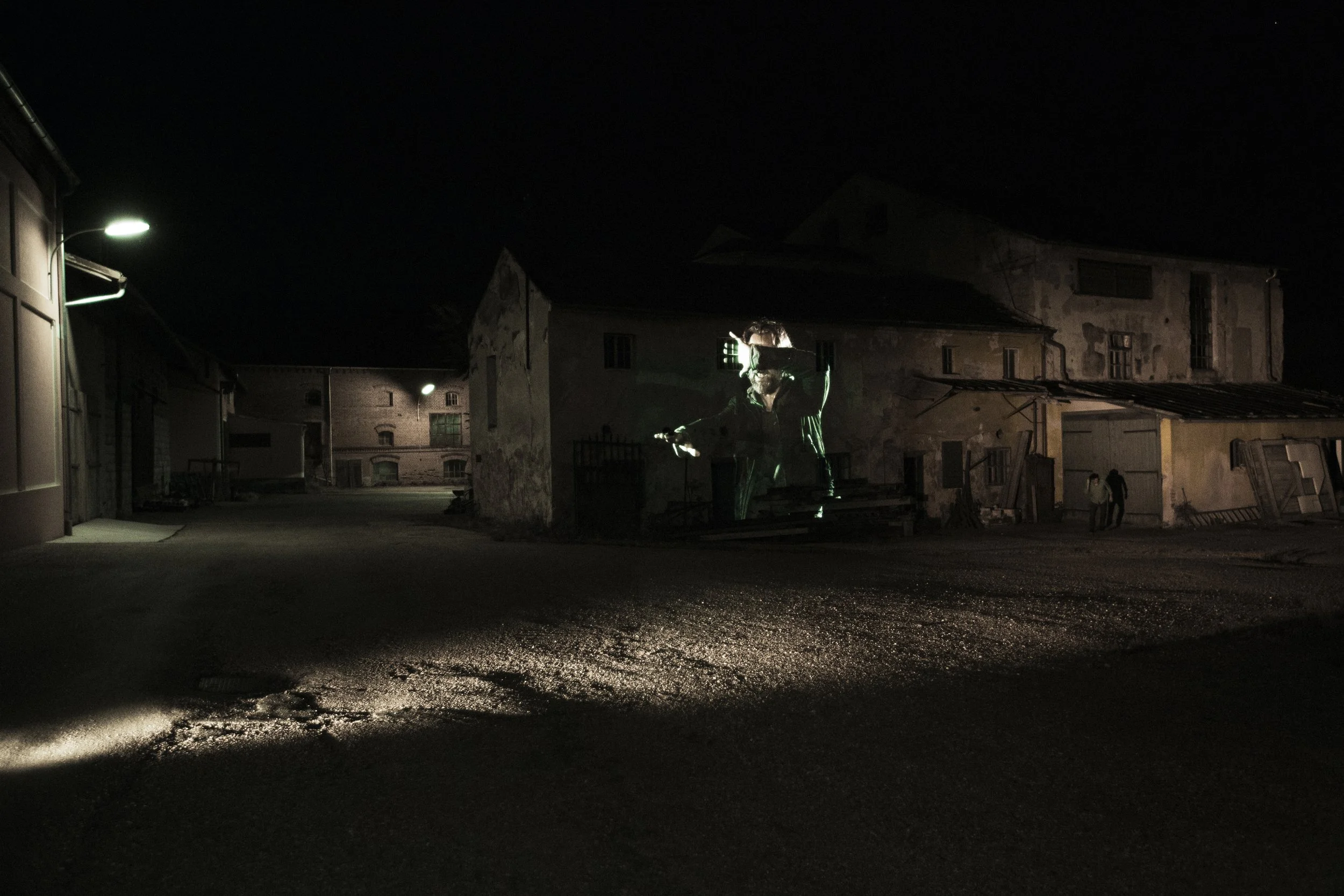
I Choose Not To (2017) - wybieram NIE
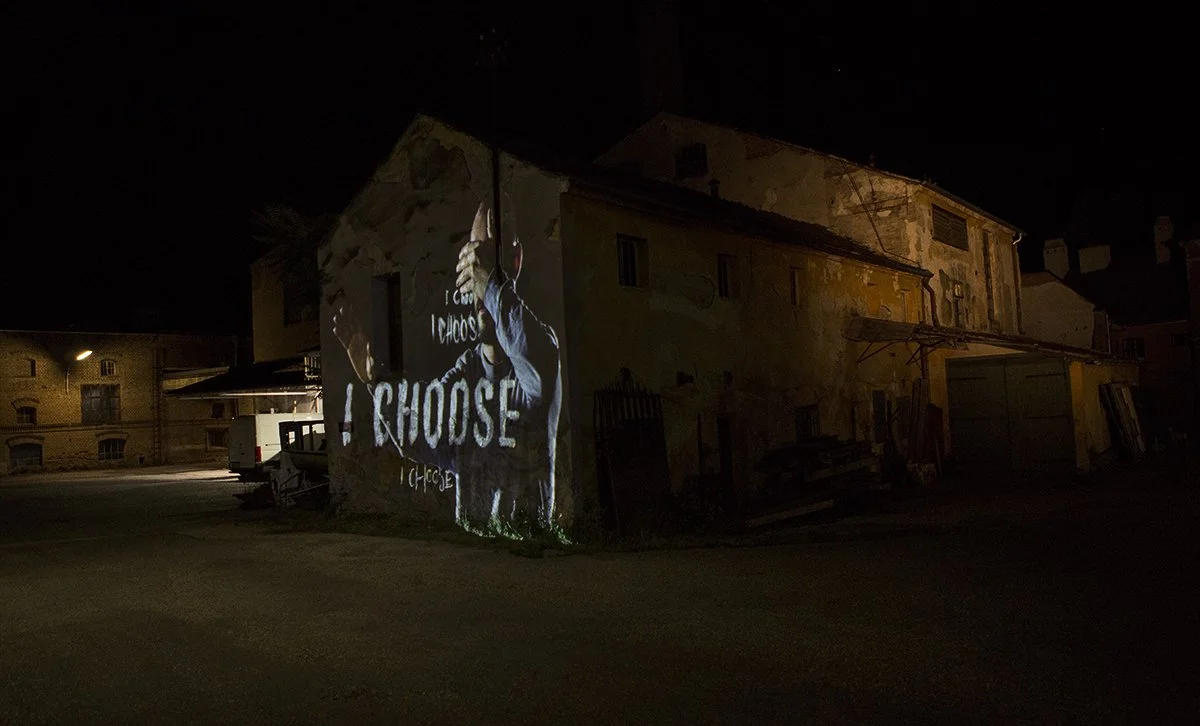
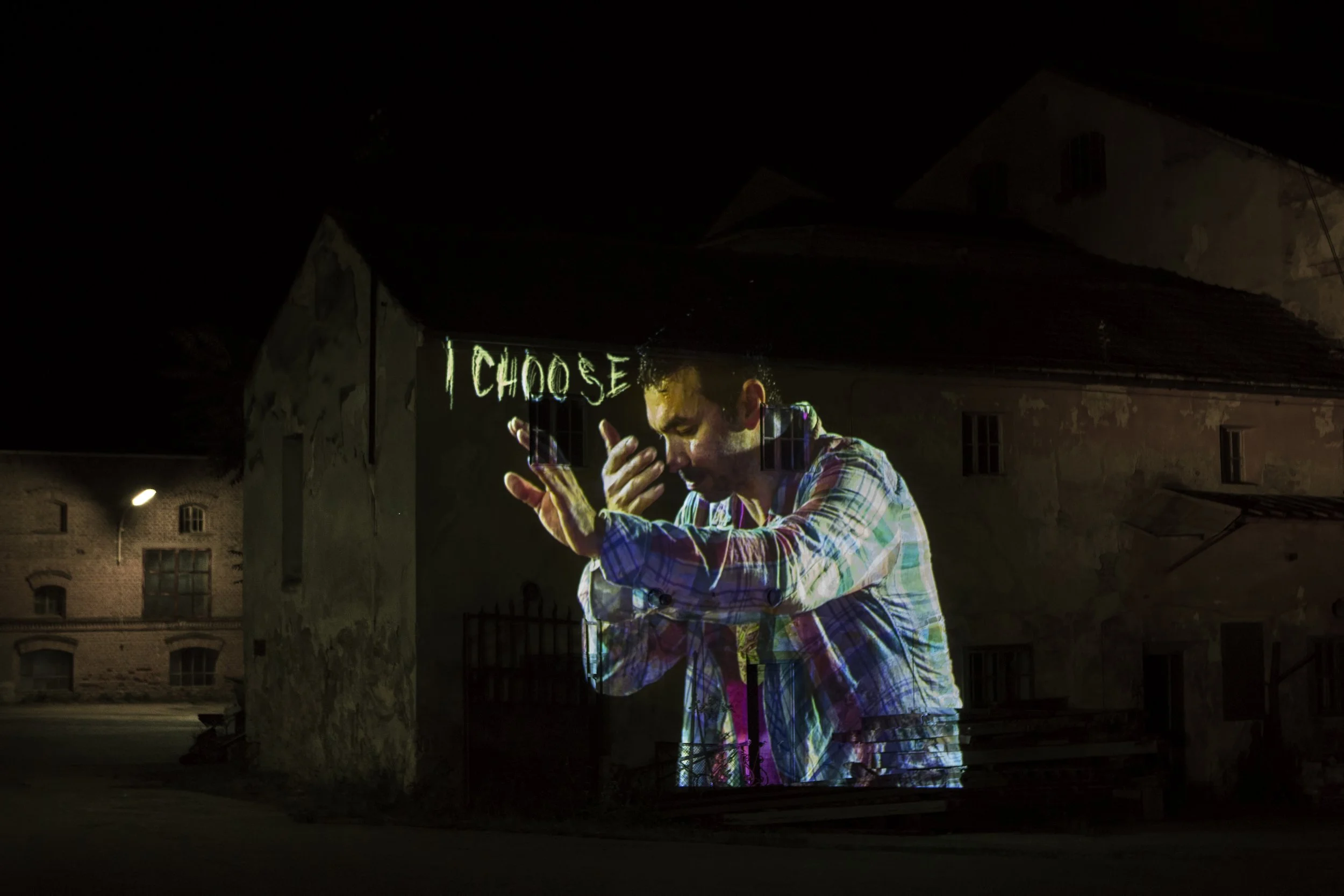
Pierwszym etapem tej drogi jest gest odmowy, który nie zostaje w pracy jednoznacznie afirmowany. I Choose Not Topowstało z potrzeby zatrzymania się w świecie, który nieustannie domaga się reakcji, stanowiska i działania, ale jednocześnie poddaje ten gest krytycznej obserwacji. Odmowa pojawia się tu nie jako rozwiązanie, lecz jako stan napięcia — reakcja na nadmiar presji, która sama w sobie niesie konsekwencje. To moment, w którym polityczna wibracja jest odczuwana jako hałas i przeciążenie, uniemożliwiające jasne pozycjonowanie się. Wycofanie staje się odruchem obronnym, ale wideo nie traktuje go jako bezpiecznej strategii. Przeciwnie — cisza, redukcja i powtarzalność obrazu stopniowo ujawniają ambiwalencję odmowy, jej potencjał zarówno ochronny, jak i paraliżujący. Brak działania nie zostaje tu przedstawiony jako neutralny gest. Odmowa przybiera formę zawieszenia, które w równym stopniu chroni, co unieruchamia. Obraz nie prowadzi narracji, lecz zatrzymuje ją w punkcie, w którym pytanie o odpowiedzialność pozostaje otwarte, a decyzja o wycofaniu nie przynosi ulgi ani rozstrzygnięcia. I Choose Not To porusza się na granicy gestu politycznego i egzystencjalnego, traktując odmowę jako symptom — efekt życia w świecie nadmiaru bodźców, oczekiwań i kryzysów. Praca nie proponuje jednoznacznej postawy, lecz bada moment, w którym brak reakcji staje się równie znaczący, jak działanie.
Projekt był również realizowany jako mapping projekcyjny we współpracy z Vienna Dynamic Projection Institute, co pozwoliło przenieść to napięcie w przestrzeń publiczną i skonfrontować widza z ambiwalencją odmowy w skali fizycznej.
The first stage of this trajectory is a gesture of refusal that is not unequivocally affirmed by the work itself. I Choose Not To emerged from the need to pause in a world that relentlessly demands reaction, position, and action, while simultaneously subjecting that gesture to critical scrutiny. Refusal appears here not as a solution, but as a state of tension — a response to overwhelming pressure that carries its own consequences. At this stage, political vibration is experienced as noise and overload, making clear positioning impossible. Withdrawal becomes a defensive reflex, yet the video does not treat it as a safe or stable strategy. On the contrary, silence, reduction, and repetition gradually reveal the ambivalence of refusal — its potential to protect, but also to paralyze. Inaction is not presented as a neutral gesture. Refusal takes the form of suspension, one that both shields and immobilizes. The image does not advance a narrative, but arrests it at a point where the question of responsibility remains unresolved, and the decision to withdraw offers neither relief nor closure. I Choose Not To operates at the threshold between a political and an existential gesture, treating refusal as a symptom — an effect of living within a world saturated with stimuli, expectations, and recurring crises. Rather than proposing a clear stance, the work examines the moment in which the absence of response becomes as charged and consequential as action itself.
The project was also realized as a projection mapping in collaboration with the Vienna Dynamic Projection Institute, allowing this tension to enter public space and confront viewers with the ambivalence of refusal at a physical, architectural scale.
II — DECYZJA O ODEJŚCIU - The Decision to Leave
It All Begins Here
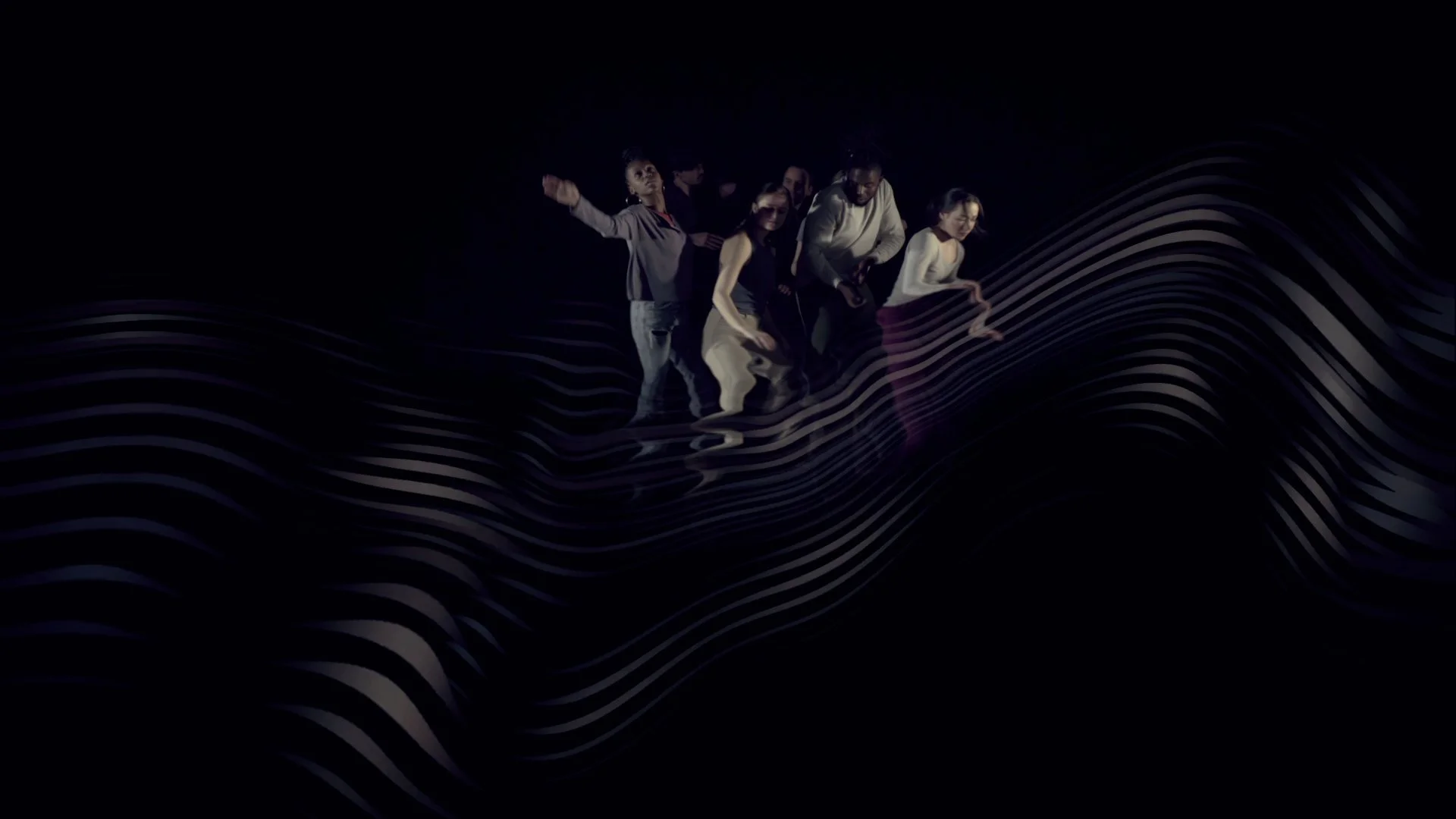
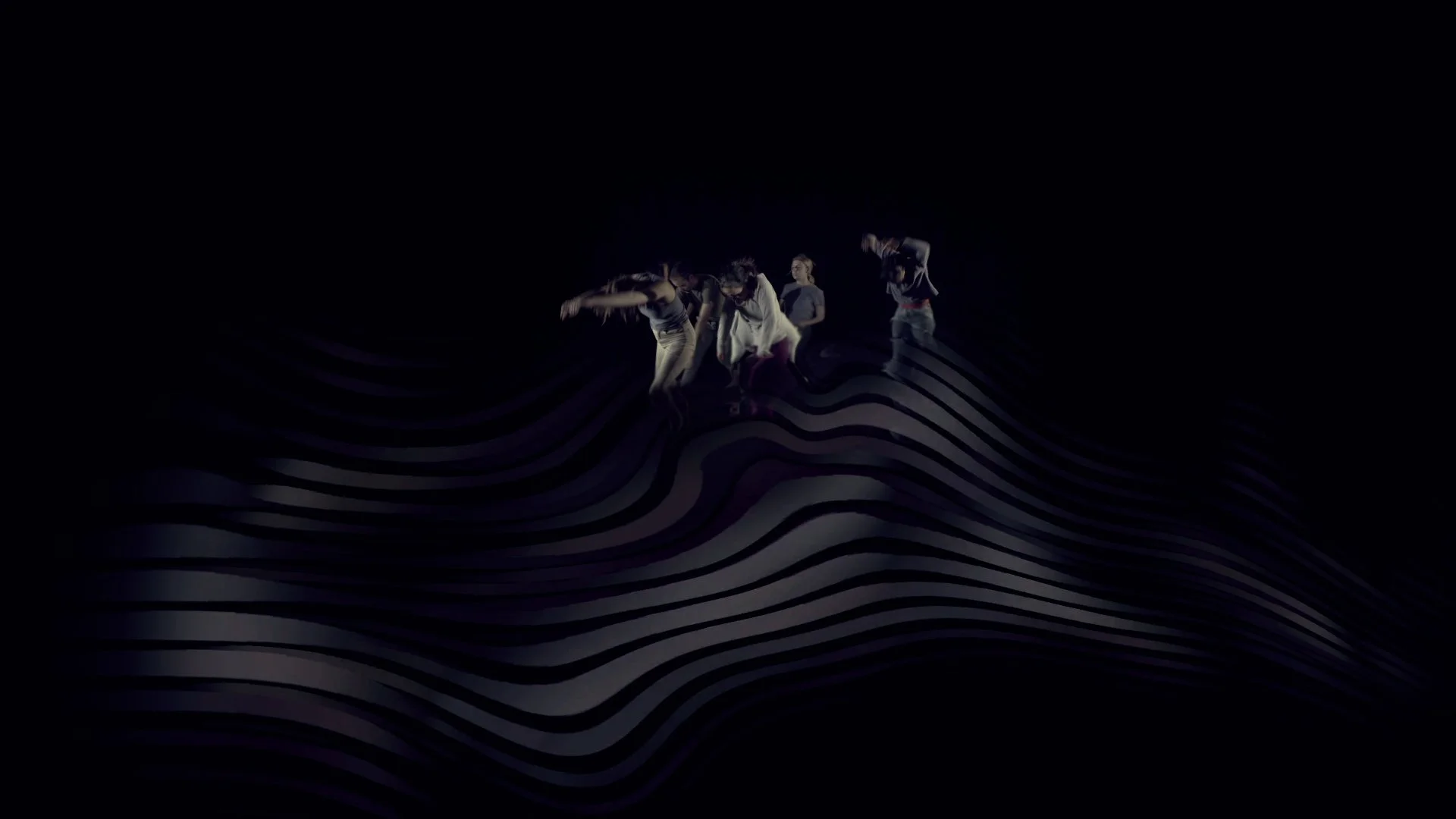
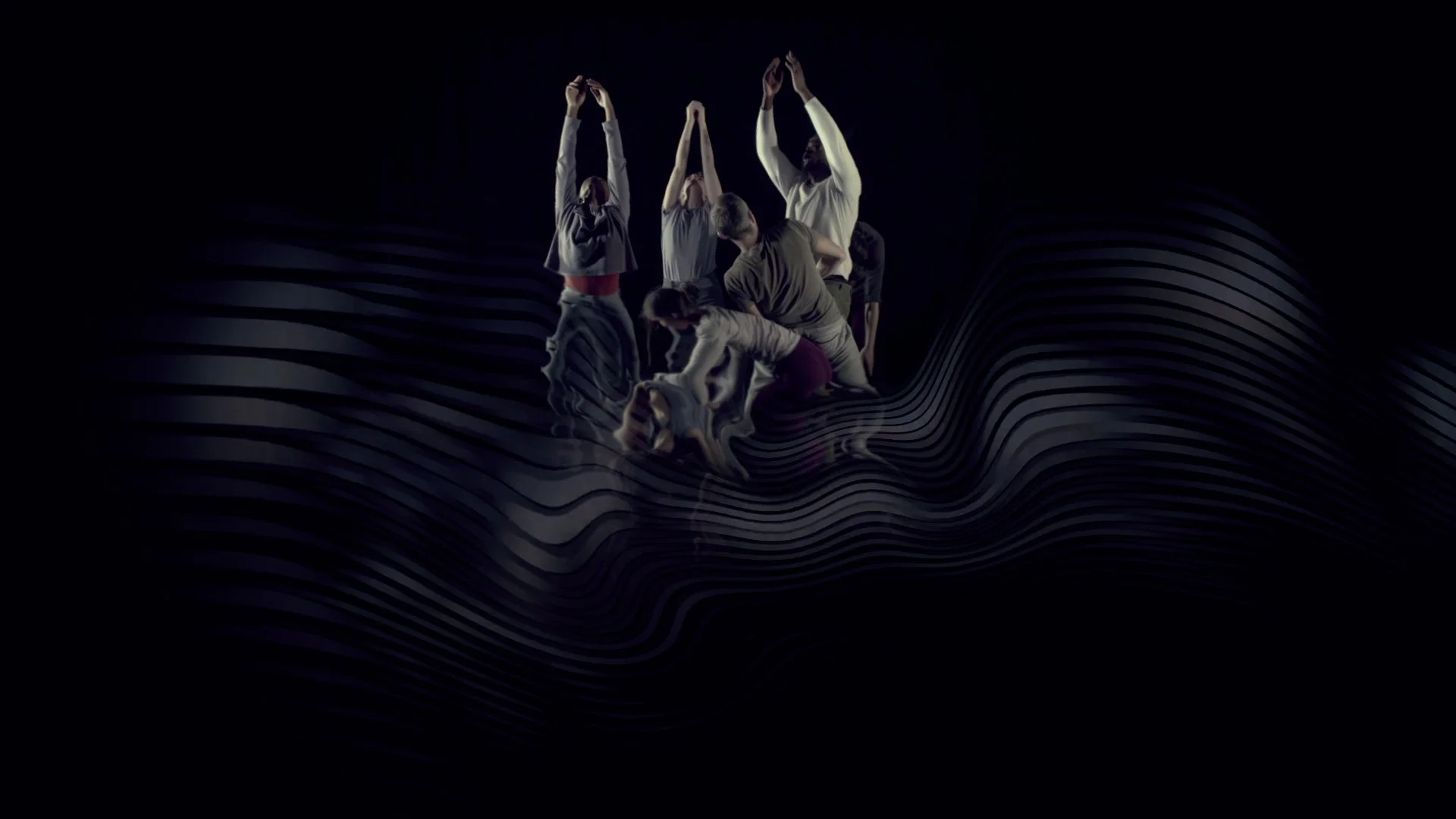
They Have Went to Sea (2022) - Poszli w morze
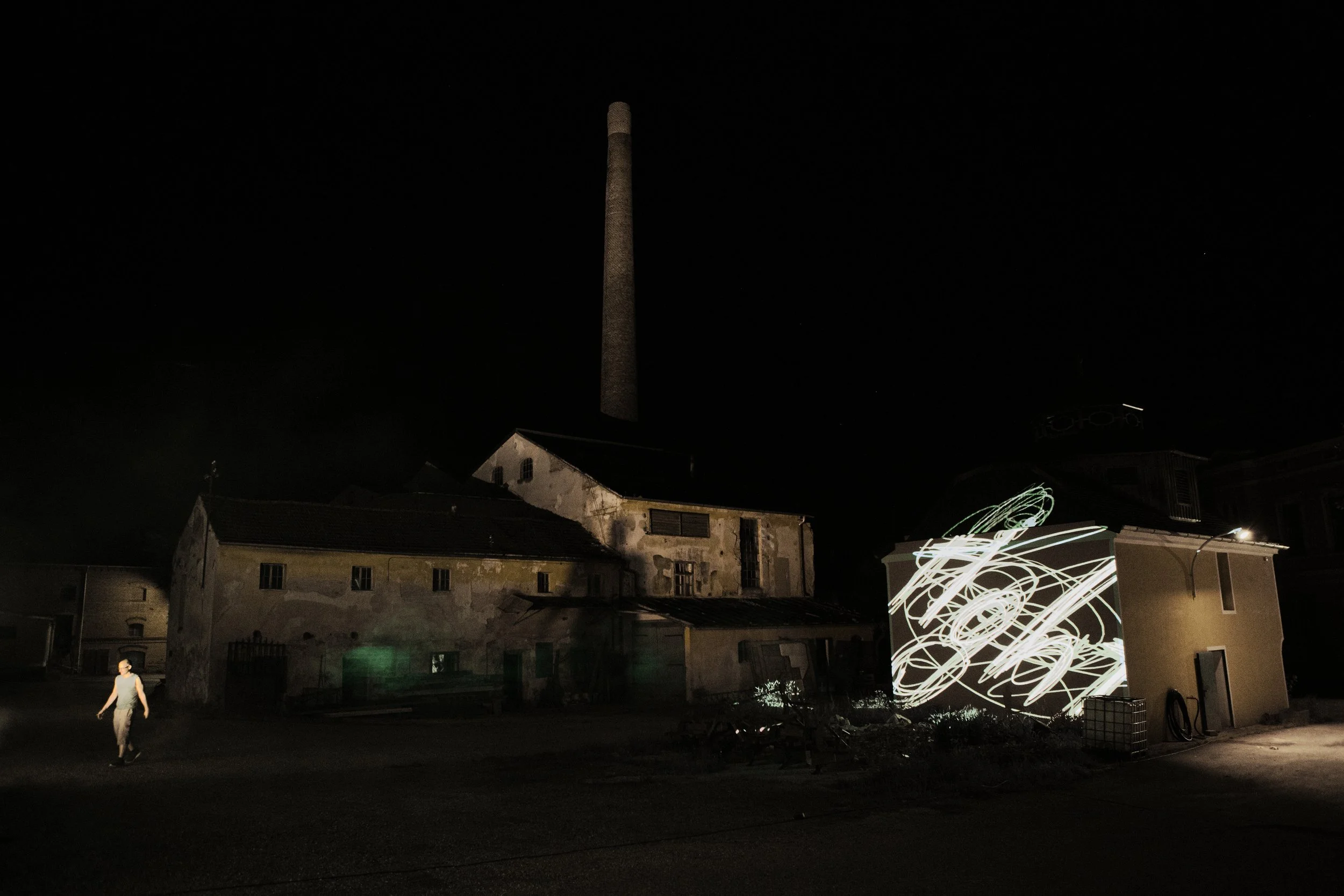
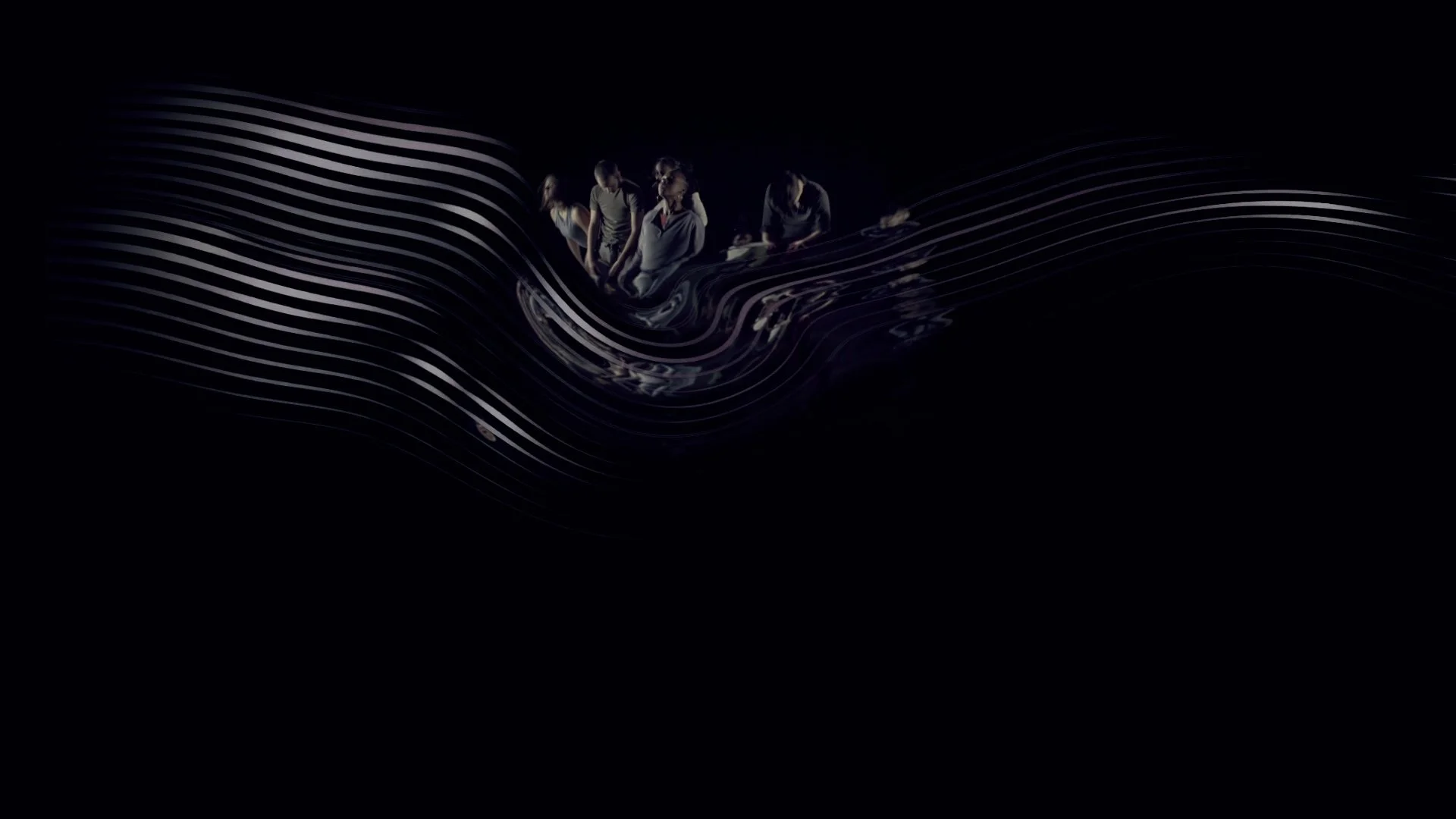
W kolejnym etapie odmowa przekształca się w decyzję o odejściu — rozumianą jako akt emigracji, zarówno dosłownej, jak i symbolicznej. They Have Went to Sea nie opowiada o podróży, lecz o stanie tuż przed nią: momencie psychologicznym, w którym opuszczenie miejsca zaczyna jawić się jako jedyna możliwa reakcja na narastające napięcia polityczne i społeczne. Obraz morza budowany jest z rytmicznych, graficznych linii generowanych przez ruch ciał. Gesty tancerzy, przetworzone algorytmicznie, tworzą niestabilną, falującą strukturę, która stopniowo pochłania swoje własne źródło. W ten sposób postacie nie tylko wchodzą w morze — współtworzą przestrzeń, w której następuje zanurzenie i znikanie. Ten zabieg przesuwa znaczenie pracy w stronę odpowiedzialności. Emigracja nie zostaje tu pokazana jako reakcja na zewnętrzny żywioł, lecz jako proces, w którym jednostki — poprzez własny ruch i decyzje — uczestniczą w wytwarzaniu warunków odejścia. Symboliczne morze staje się metaforą systemu nacisków, który jest jednocześnie doświadczany i generowany. Polityka funkcjonuje w tej pracy jako pole sił wpływające na zachowania ciał i dynamikę wyborów. They Have Went to Sea krytycznie bada emigrację jako konsekwencję długotrwałego napięcia — gest, który nie przynosi prostego rozwiązania, lecz prowadzi do stanu zawieszenia i nieodwracalności. Praca zatrzymuje się w momencie granicznym — tuż przed przekroczeniem, bez obietnicy nowego początku. To etap, w którym poszukiwanie miejsca w świecie zaczyna oznaczać jego opuszczenie, przy jednoczesnej świadomości, że konsekwencje tej decyzji nie są wyłącznie narzucone z zewnątrz, lecz wynikają również z naszych własnych działań.
In the next stage, refusal transforms into a decision to leave — understood as an act of emigration, both literal and symbolic. They Have Went to Sea does not narrate a journey, but focuses on the moment just before it: a psychological state in which leaving begins to appear as the only possible response to mounting political and social tensions. The image of the sea is constructed from rhythmic, graphic lines generated by bodily movement. The gestures of dancers, processed algorithmically, form an unstable, undulating structure that gradually absorbs its own source. In this way, the figures do not simply enter the sea — they co-create the very space in which immersion and disappearance occur. This strategy shifts the work toward a question of responsibility. Emigration is not presented as a reaction to an external force, but as a process in which individuals, through their own movement and decisions, participate in producing the conditions of departure. The symbolic sea becomes a metaphor for a system of pressures that is both experienced and generated. Politics functions here as a field of forces shaping bodily behavior and the dynamics of choice. They Have Went to Sea critically examines emigration as a consequence of prolonged tension — a gesture that offers no simple resolution, but leads instead to a state of suspension and irreversibility. The work remains in a threshold moment, just before crossing, without the promise of a new beginning. At this stage, the search for one’s place in the world begins to mean leaving it — with the awareness that the consequences of this decision are not imposed solely from the outside, but also arise from our own actions.
III — KATASTROFA JAKO STAN - Catastrophe as a State
It All Begins Here
Serves Us Right (2020) - DOBRZE NAM TAK
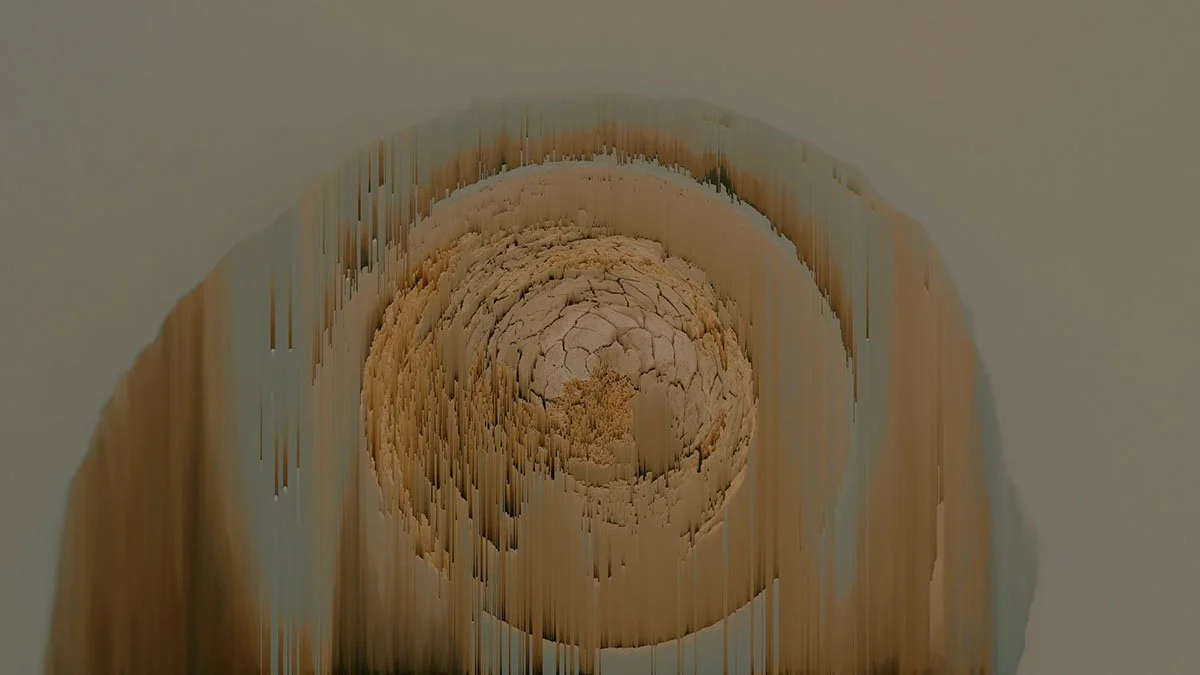
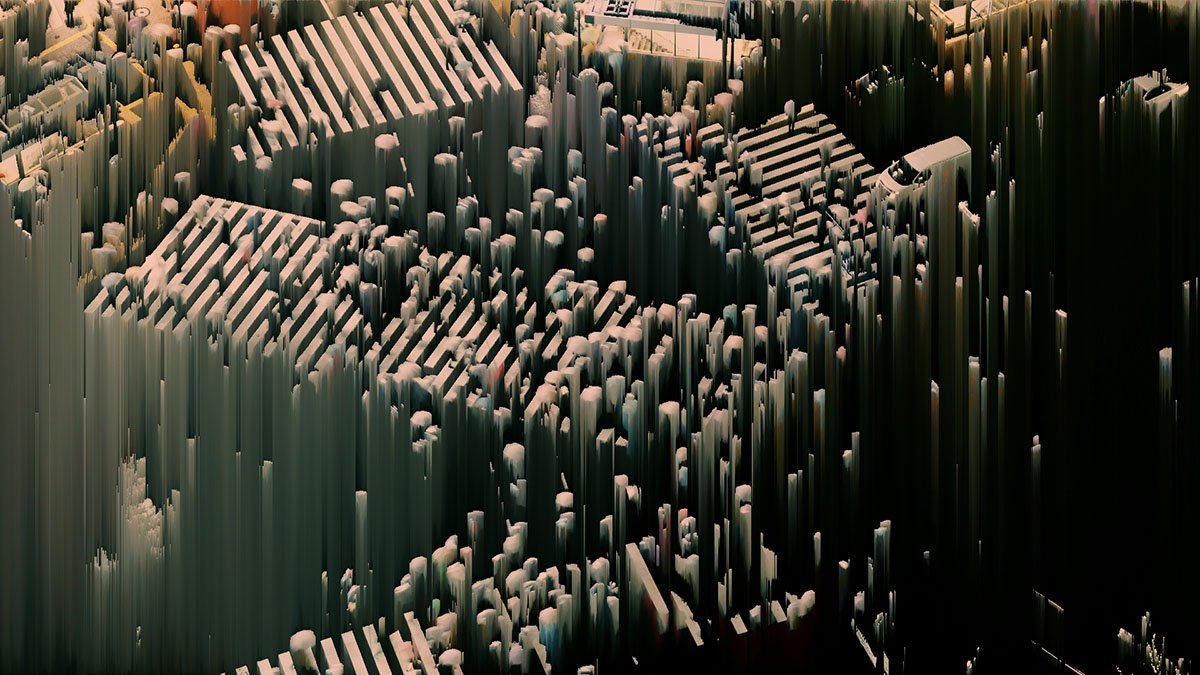
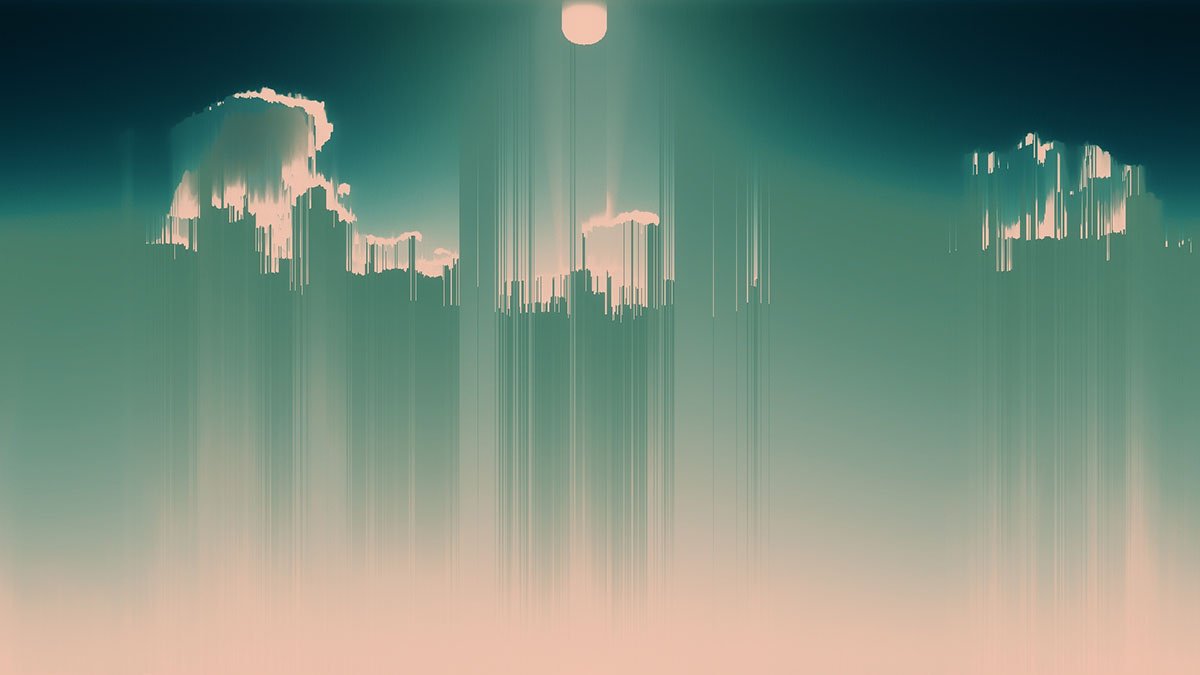
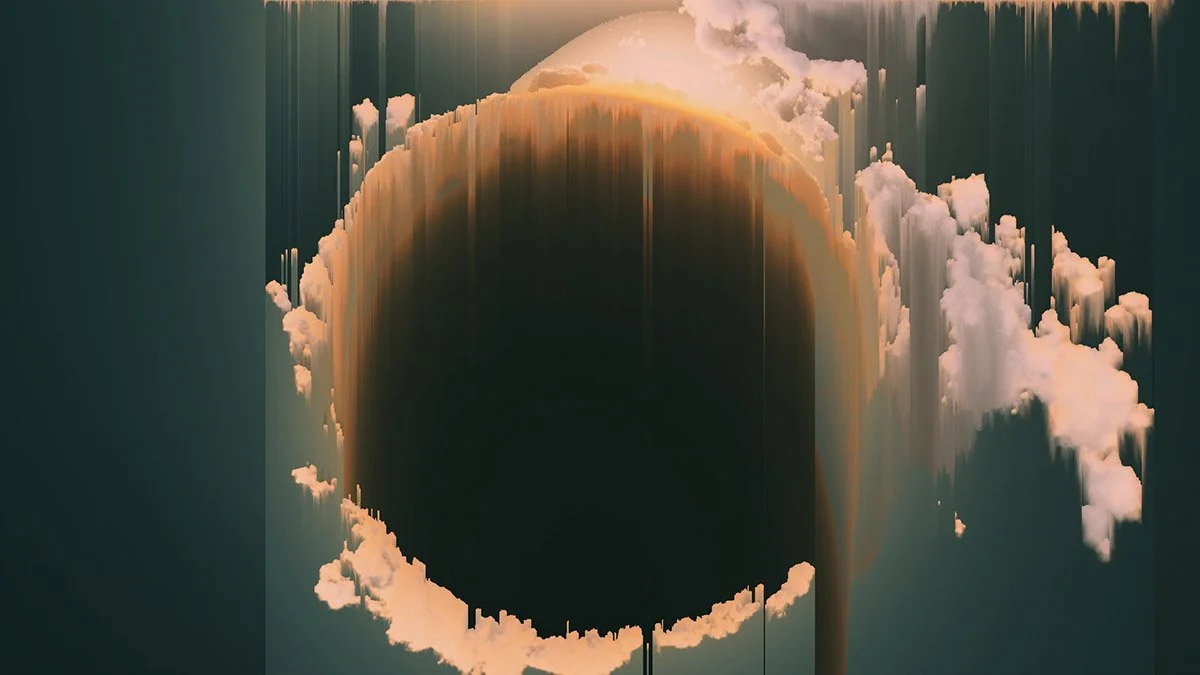
(PL) Serves Us Right powstało w czasie izolacji, w momencie, gdy doświadczenie globalnego kryzysu zbiegło się z osobistym poczuciem zamknięcia i bezruchu. Praca wyrasta z napięcia pomiędzy rosnącą świadomością katastrofy a niemożnością bezpośredniego działania. Zamiast reagować dosłownie, zwróciłam się ku obrazowi jako przestrzeni przetworzenia — miejsca, w którym rzeczywistość może zostać zdeformowana, rozbita i złożona na nowo. Film nie dokumentuje świata zewnętrznego, lecz traktuje katastrofę jako stan ciągły. Obraz podlega intensywnym przekształceniom poprzez rytm, fragmentację i cyfrową ingerencję. Pracując na istniejących materiałach (footage BASHING), przesuwam uwagę z opowiadania zdarzeń na sam proces transformacji obrazu. Sens nie jest przekazywany wprost, lecz ujawnia się jako napięcie, wrażenie i energia narastająca wraz z kolejnymi deformacjami. Katastrofa obecna w Serves Us Right nie ma formy jednoznacznego obrazu ani pojedynczego wydarzenia. Jest konsekwencją ludzkich wyborów, konsumpcyjnego rozpędu i utraty relacji ze światem, który coraz częściej traktujemy jako zasób. Tytuł pracy ma dla mnie wymiar gorzki, ale nie oskarżycielski — wskazuje na moment, w którym odpowiedzialność przestaje być możliwa do odsunięcia. W mojej praktyce Serves Us Right zajmuje miejsce przejściowe: pomiędzy pracami o wyraźnym charakterze społeczno-politycznym a późniejszymi realizacjami, w których narracja zaczyna się kruszyć, a polityka traci język, pozostawiając po sobie jedynie drganie. To etap, w którym obraz przestaje wyjaśniać, a zaczyna rezonować.
Praca może funkcjonować jako autonomiczny film lub jako pętla instalacyjna, zapraszając widza do doświadczenia czasu kryzysu nie poprzez opowieść, lecz poprzez intensywność obrazu.
(ENG) Serves Us Right was created during a period of isolation, at a moment when the experience of a global crisis coincided with a personal sense of confinement and immobility. The work emerges from the tension between a growing awareness of catastrophe and the impossibility of direct action. Rather than responding literally, I turned to the image as a space of processing — a place where reality can be deformed, broken apart, and reassembled. The film does not document the external world; instead, it treats catastrophe as a continuous state. The image undergoes intensive transformations through rhythm, fragmentation, and digital intervention. Working with existing materials (footage bashing), I shift attention away from narrating events toward the process of image transformation itself. Meaning is not communicated directly, but revealed as tension, sensation, and energy that accumulates through successive distortions. The catastrophe present in Serves Us Right does not take the form of a single image or a singular event. It is understood as a consequence of human choices, consumerist acceleration, and the erosion of our relationship with a world increasingly treated as a resource. The title carries a bitter, but not accusatory tone — pointing to a moment in which responsibility can no longer be deferred. Within my practice, Serves Us Right occupies a transitional position: between works with a clearly articulated socio-political dimension and later realizations in which narrative begins to fracture and politics loses its language, leaving behind only vibration. This is the stage at which the image ceases to explain and begins to resonate.
The work can function either as an autonomous film or as an installation loop, inviting the viewer to experience the time of crisis not through storytelling, but through the intensity of the image.
IV — PĘKNIĘCIE JĘZYKA - The Fracture of Language
It All Begins Here
Empty States (Stany Puste, 2019)
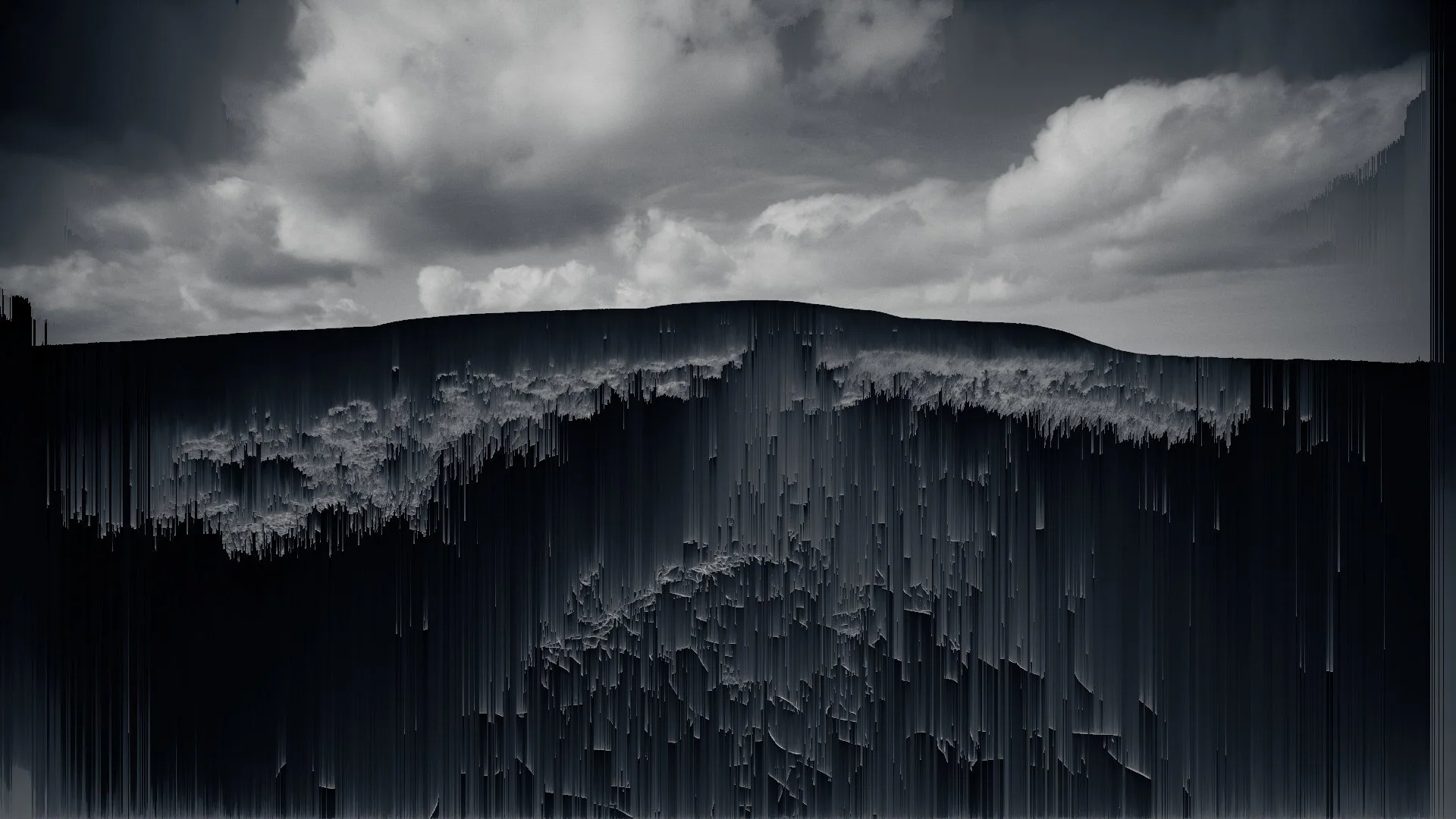
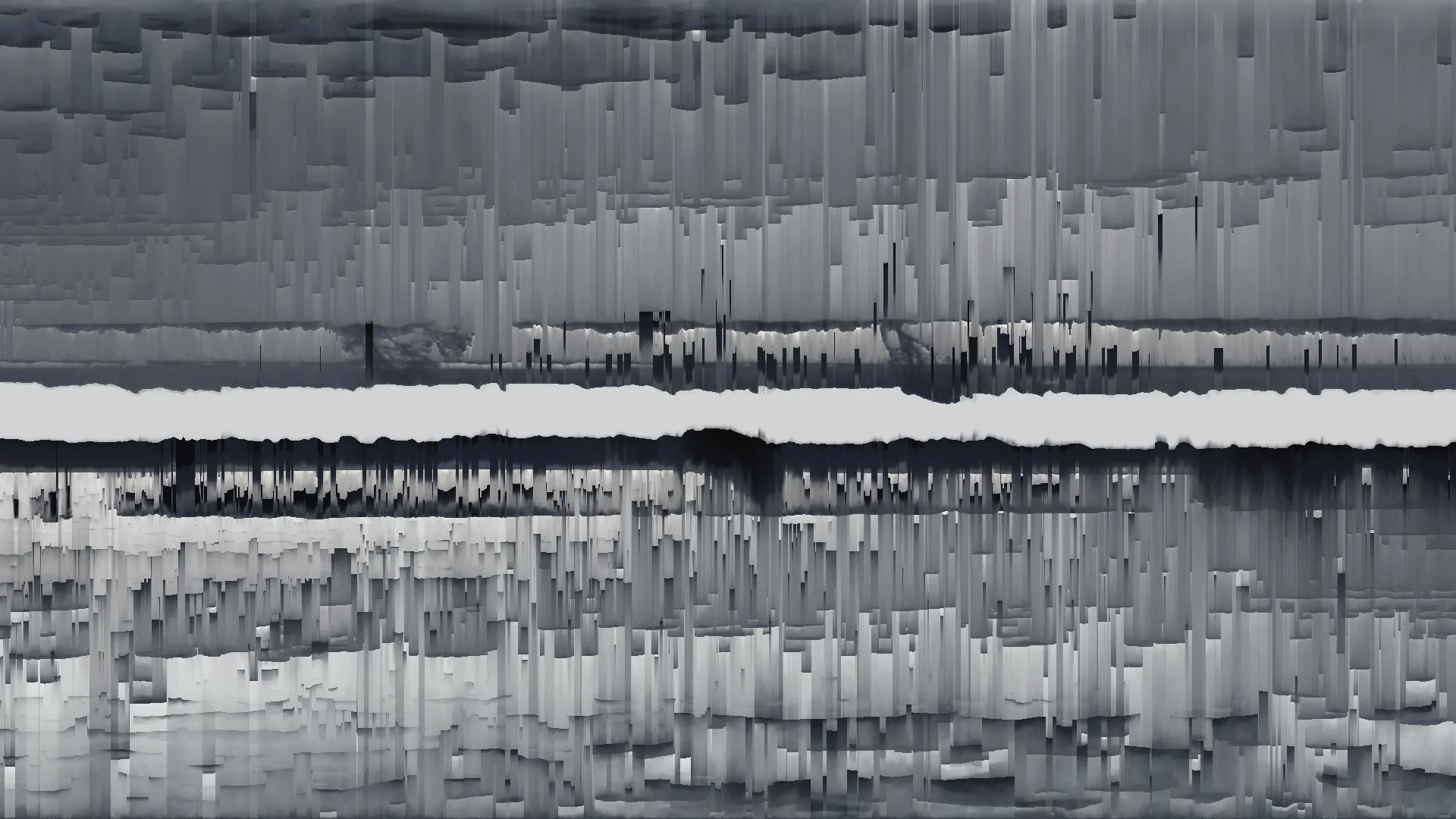
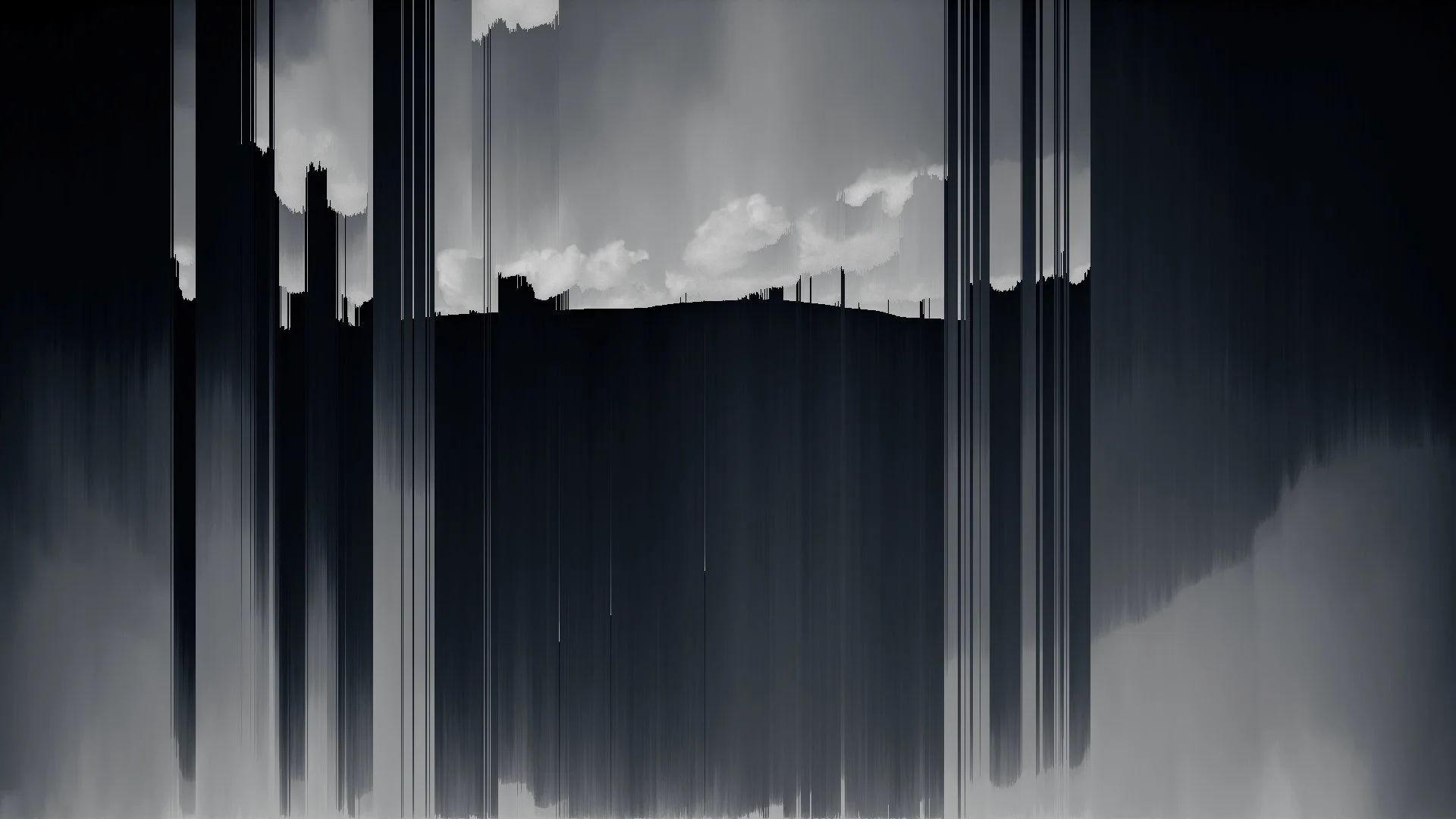
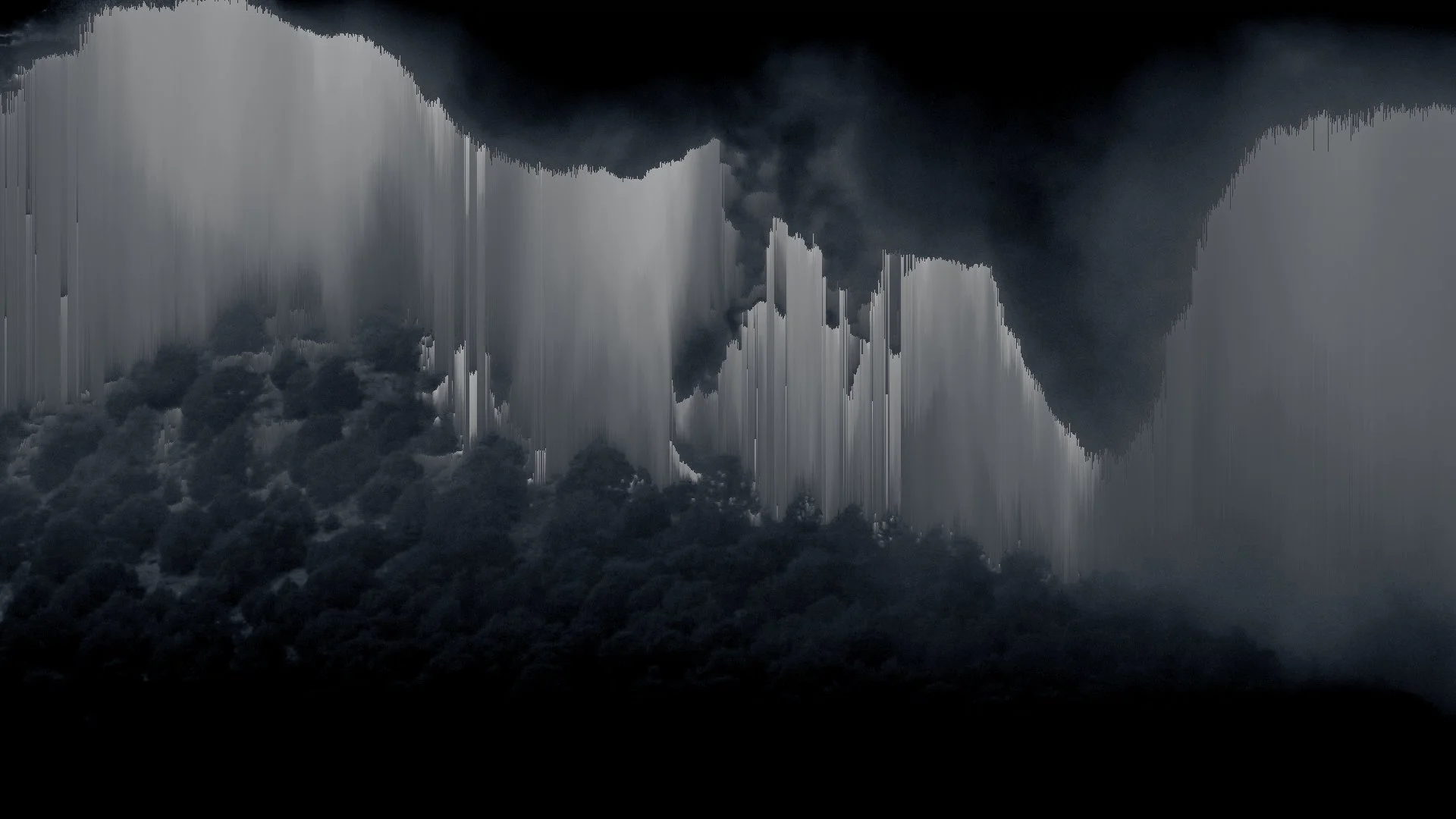
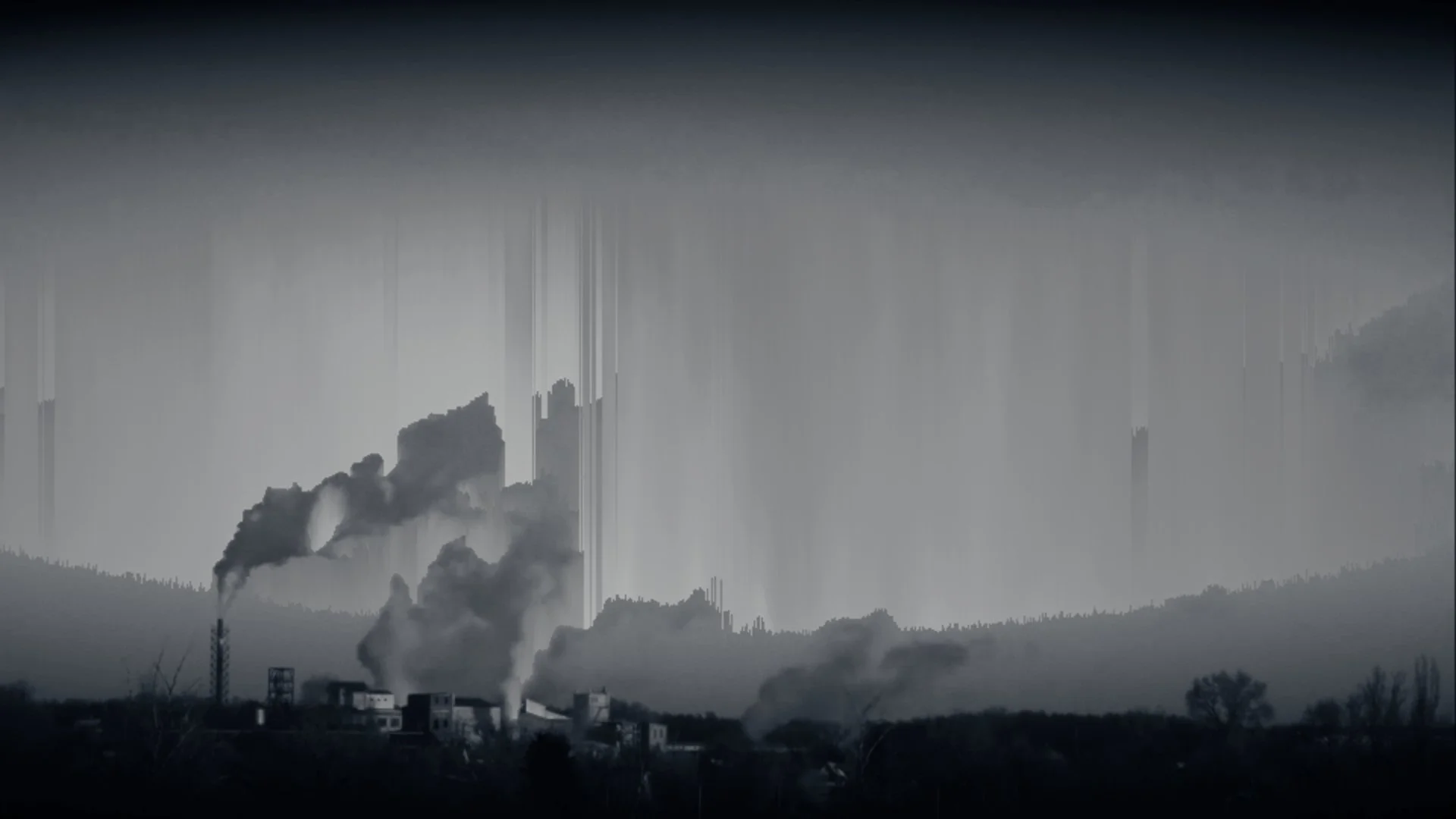
Stany Puste są punktem granicznym całej mojej praktyki. To praca po końcu — po wyczerpaniu narracji politycznej i po utracie wiary w możliwość opisywania rzeczywistości poprzez słowa, symbole i deklaracje. Jest to moment, w którym język przestaje działać, a potrzeba wyjaśniania świata zostaje świadomie porzucona. Pustka nie funkcjonuje tu jako brak, lecz jako stan przejściowy. Negatywna wibracja świata nie znika, lecz przestaje być nazywana. Obraz balansuje pomiędzy abstrakcją a pejzażem końca świata, a znaczenie wyłania się wyłącznie z rytmu, ruchu i trwania — z samego doświadczenia czasu. Na tym etapie poszukiwanie miejsca w świecie oznacza zgodę na jego chwilowy brak. Stany Puste są przestrzenią zawieszenia: ciszą po intensywnym napięciu, oddechem po wyczerpaniu narracji. To moment, w którym stare znaczenia już nie działają, a nowe jeszcze się nie wyłoniły. W tej pracy po raz pierwszy w pełni ufam obrazowi jako zjawisku czasowemu i energetycznemu. Znaczenie nie jest tu opowiadane ani ilustrowane — pojawia się jako doświadczenie, które widz przechodzi we własnym tempie. Stany Pustenie proponują rozwiązania ani nowej opowieści; pozostają w stanie oczekiwania, traktując pustkę jako warunek możliwości dalszej transformacji.
Empty States mark a critical threshold in my practice. The work emerges after an ending — after the exhaustion of political narrative and the loss of faith in language as a means of describing reality through words, symbols, and declarations. It is a moment in which language ceases to function, and the need to explain the world is consciously abandoned. Here, emptiness does not operate as a lack, but as a transitional state. The negative vibration of the world does not disappear; it simply stops being named. The image oscillates between abstraction and an end-of-the-world landscape, while meaning arises solely through rhythm, movement, and duration — through the experience of time itself. At this stage, the search for a place in the world entails accepting its temporary absence. Empty States exist as a space of suspension: a silence following intense pressure, a breath after narrative exhaustion. It is a moment in which old meanings no longer function, while new ones have yet to emerge. In this work, I place full trust in the image as a temporal and energetic phenomenon. Meaning is neither narrated nor illustrated; it appears as an experience that the viewer must traverse at their own pace. Empty States do not offer solutions or a new story — they remain in a state of waiting, treating emptiness as the condition of possibility for further transformation.
V — PODRÓŻ PRZEZ ŻAŁOBĘ - A Journey Through Mourning
It All Begins Here
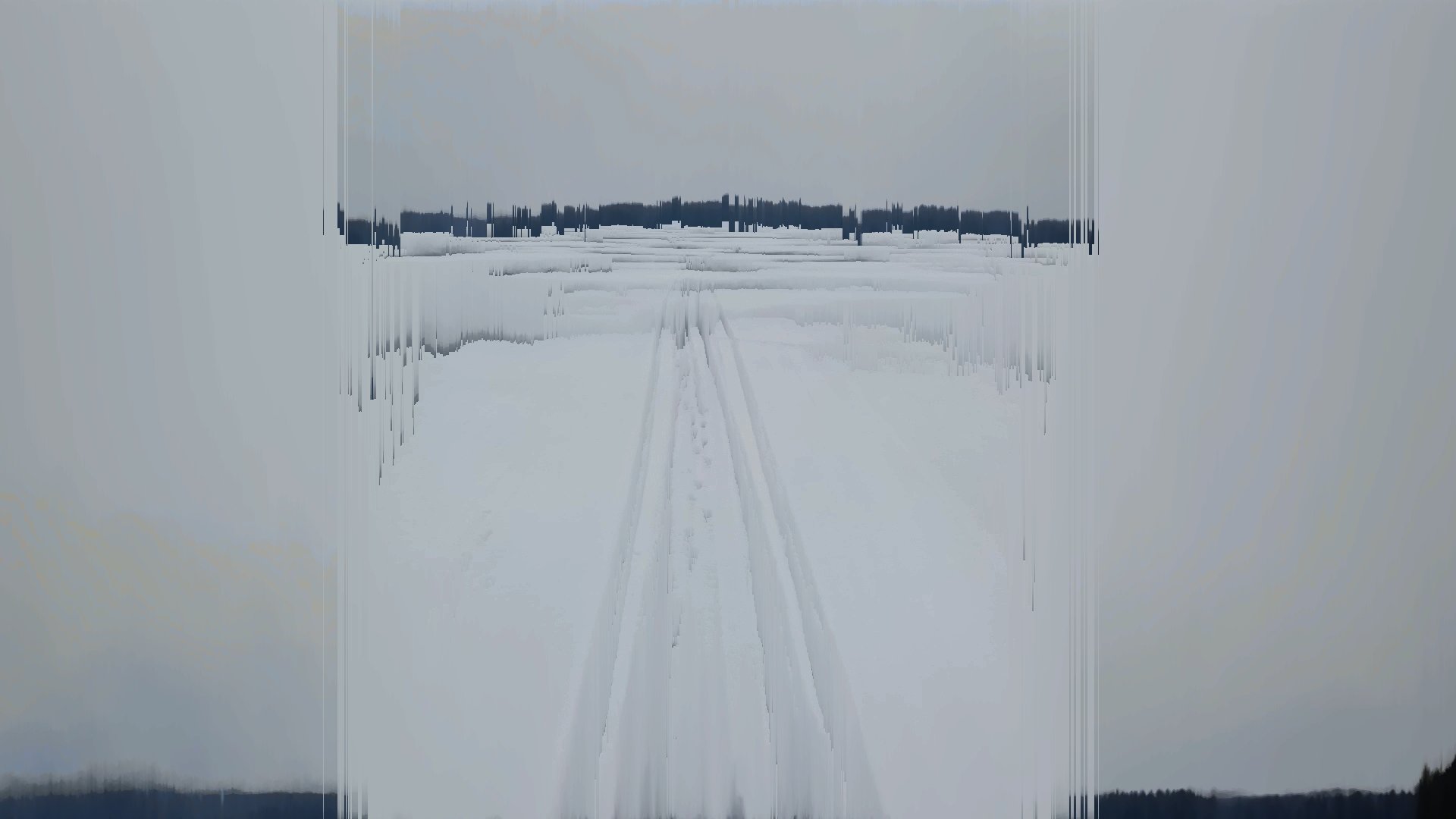
Przepływ (Flow, 2020)
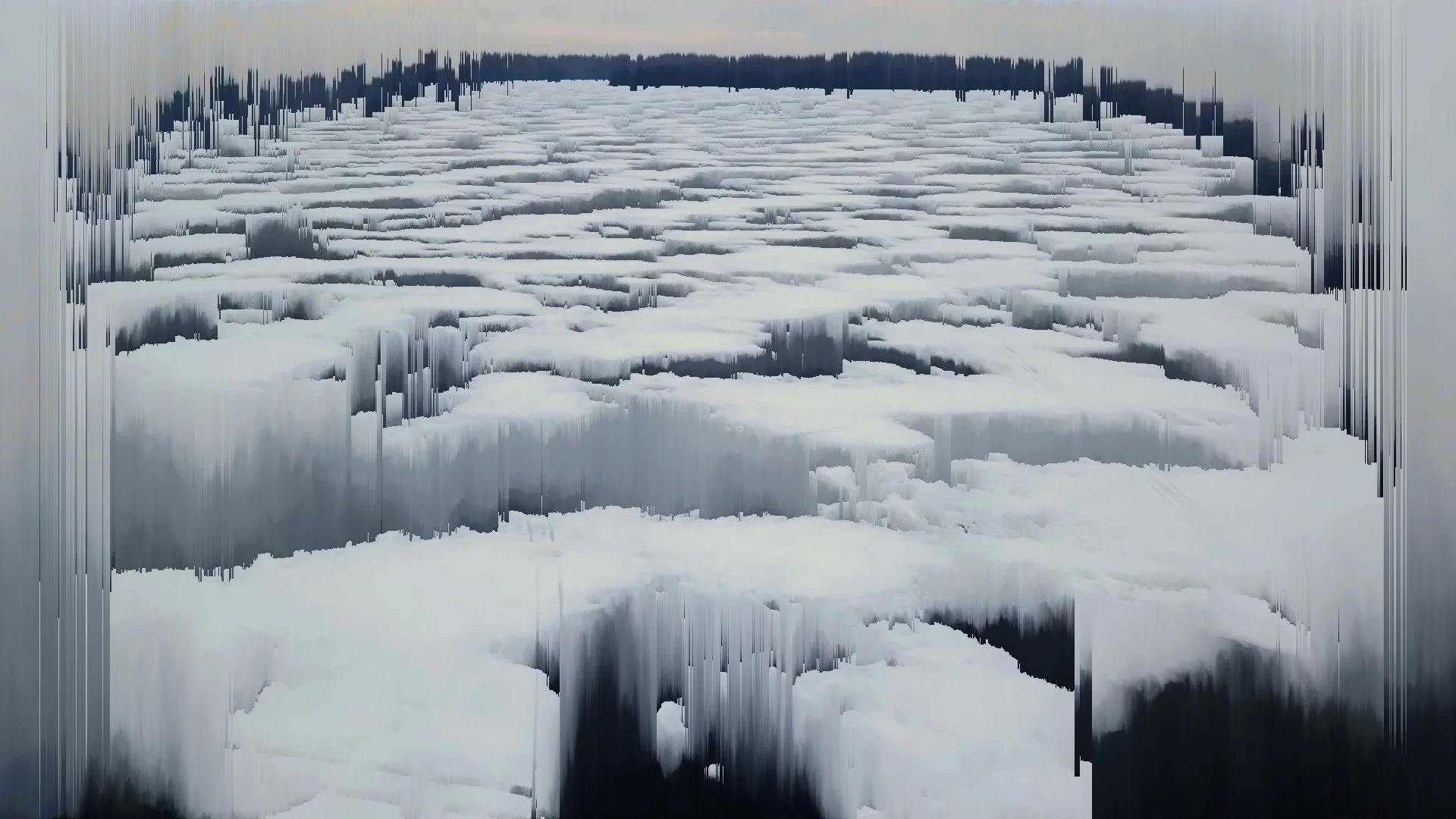
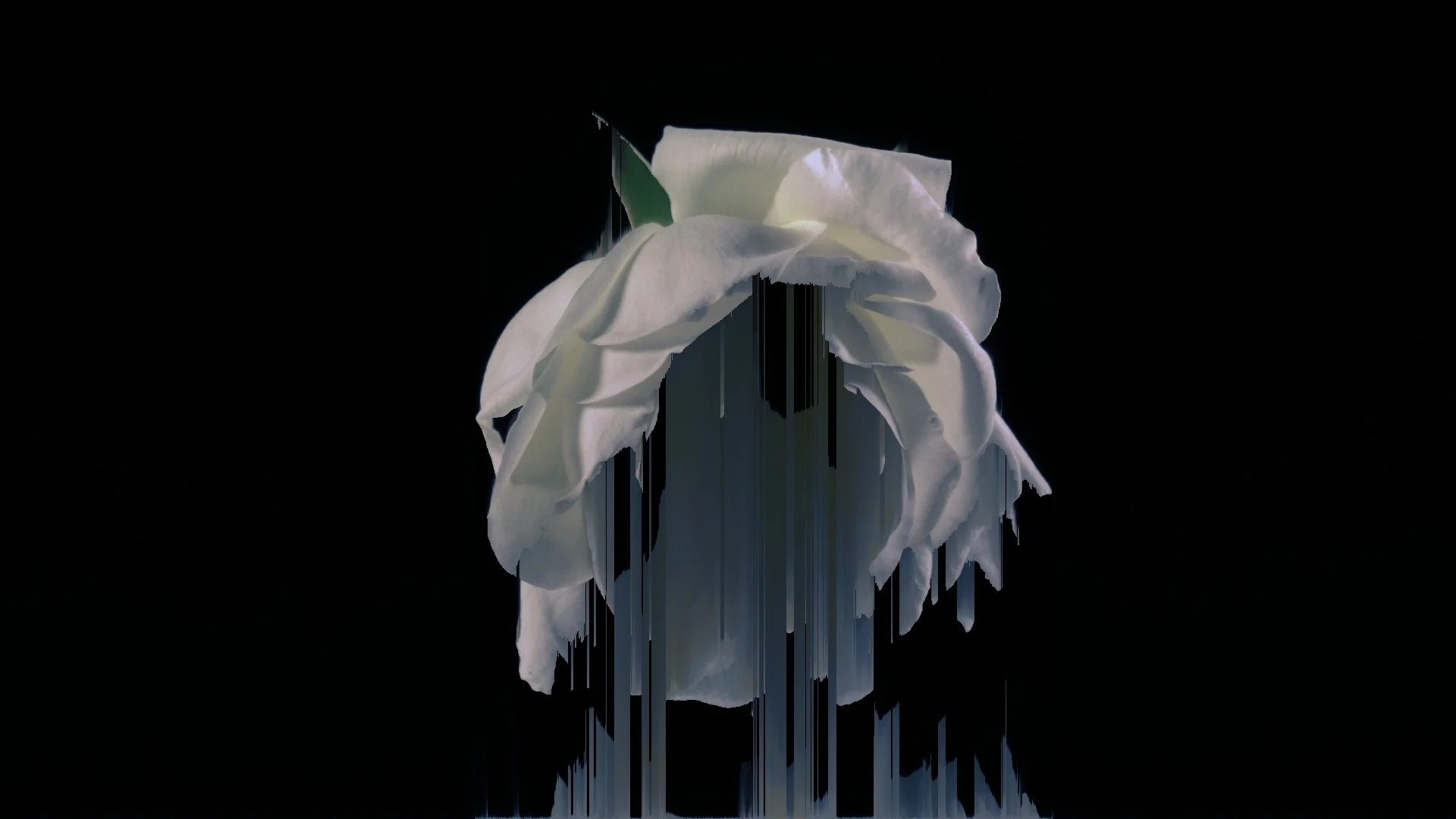
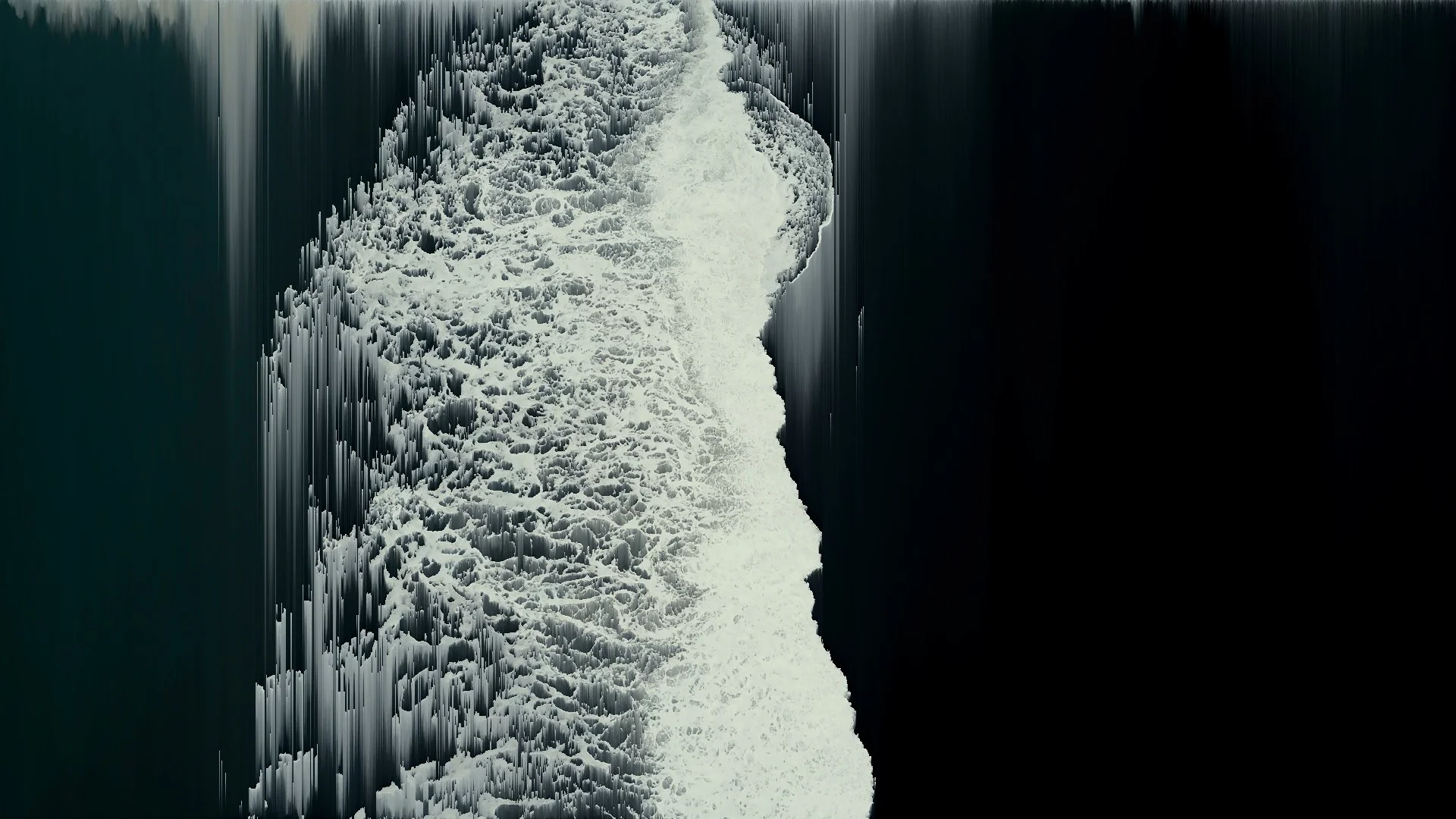
Po pęknięciu języka pojawia się ruch. Przepływ jest pracą o żałobie rozumianej jako proces, który posiada własną trajektorię. Film ma wyraźny początek i koniec — rozpoczyna się obrazem czarnego oceanu, a kończy wejściem w ciemną, kosmiczną przestrzeń, przypominającą pochłaniającą pustkę. Pomiędzy tymi punktami rozciąga się podróż, którą traktuję jako wewnętrzne przejście, a nie narrację fabularną. Obraz prowadzi widza przez kolejne stany doświadczenia, przywołując wrażenie dryfowania i przemieszczania się przez nieznane, niemal kosmiczne pejzaże. Jest to podróż pozbawiona orientacji i celu w tradycyjnym sensie — nie zmierza ku rozwiązaniu ani ukojenia, lecz ku zanurzeniu się w niepewności i utracie punktów odniesienia. Sens nie zostaje tu odzyskany ani wyjaśniony; zostaje przeżyty. Przepływ powstał z potrzeby nadania formy doświadczeniu, które wymyka się językowi. Żałoba nie jest tu opowiadana ani definiowana, lecz przechodzona — jako proces stopniowego oddalania się od świata znanych znaczeń. Ruch obrazu, zmieniająca się skala i rytm zastępują słowa, prowadząc widza w stronę doświadczenia granicznego. W mojej praktyce praca ta rozwija etap zapoczątkowany w Stanach Pustych, przesuwając uwagę z pustki po załamaniu narracji w stronę ruchu i przejścia. Polityczne napięcie, obecne wcześniej jako ciężar i brak języka, zostaje tu przetworzone w czas, przestrzeń i energię. Przepływ nie proponuje przezwyciężenia negatywnej wibracji świata — pozwala przez nią przejść.
Film może być prezentowany jako wideo jednokanałowe lub jako część instalacji, w której czas i ciemność stają się kluczowymi elementami doświadczenia.
After the fracture of language, movement emerges. Flow is a work about mourning understood as a process with its own trajectory. The film has a clear beginning and end — it opens with the image of a black ocean and concludes with an entry into a dark, cosmic space resembling an all-consuming void. Between these points unfolds a journey that I approach as an inner passage rather than a narrative in the conventional sense. The image guides the viewer through successive states of experience, evoking a sense of drifting and movement through unfamiliar, almost cosmic landscapes. This journey is deprived of orientation and destination in the traditional sense — it does not aim toward resolution or consolation, but toward immersion in uncertainty and the loss of reference points. Meaning is neither recovered nor explained; it is lived. Flow emerged from the need to give form to an experience that escapes language. Mourning is not narrated or defined, but traversed — as a process of gradual distancing from the world of familiar meanings. The movement of the image, shifting scale, and rhythm replace words, leading the viewer toward a threshold experience. Within my practice, this work develops the stage initiated in Empty States, shifting attention from the void that follows narrative collapse toward movement and passage. Political tension, previously present as weight and linguistic absence, is here transformed into time, space, and energy. Flow does not propose overcoming the negative vibration of the world — it allows one to pass through it.
The film can be presented as a single-channel video or as part of an installation in which time and darkness become key elements of the experience.
VI - PUNKT STYKU - Point of Contact
It All Begins Here
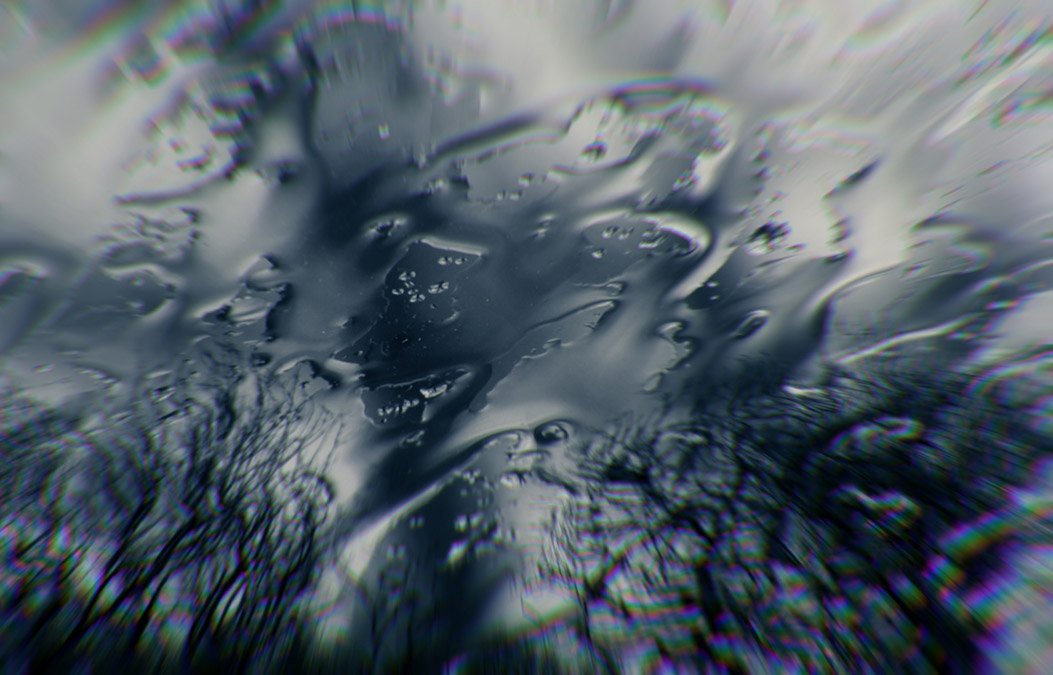
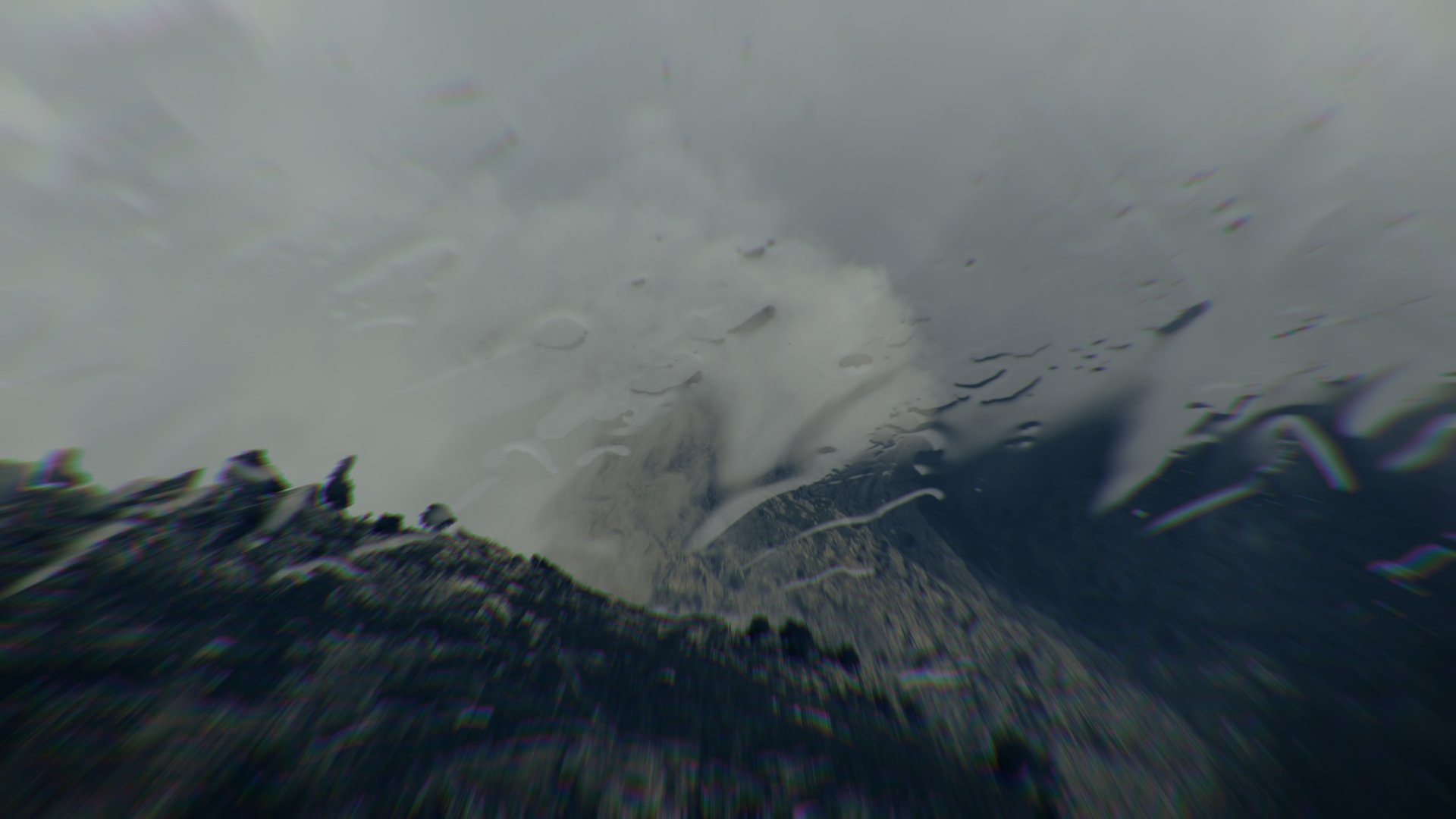
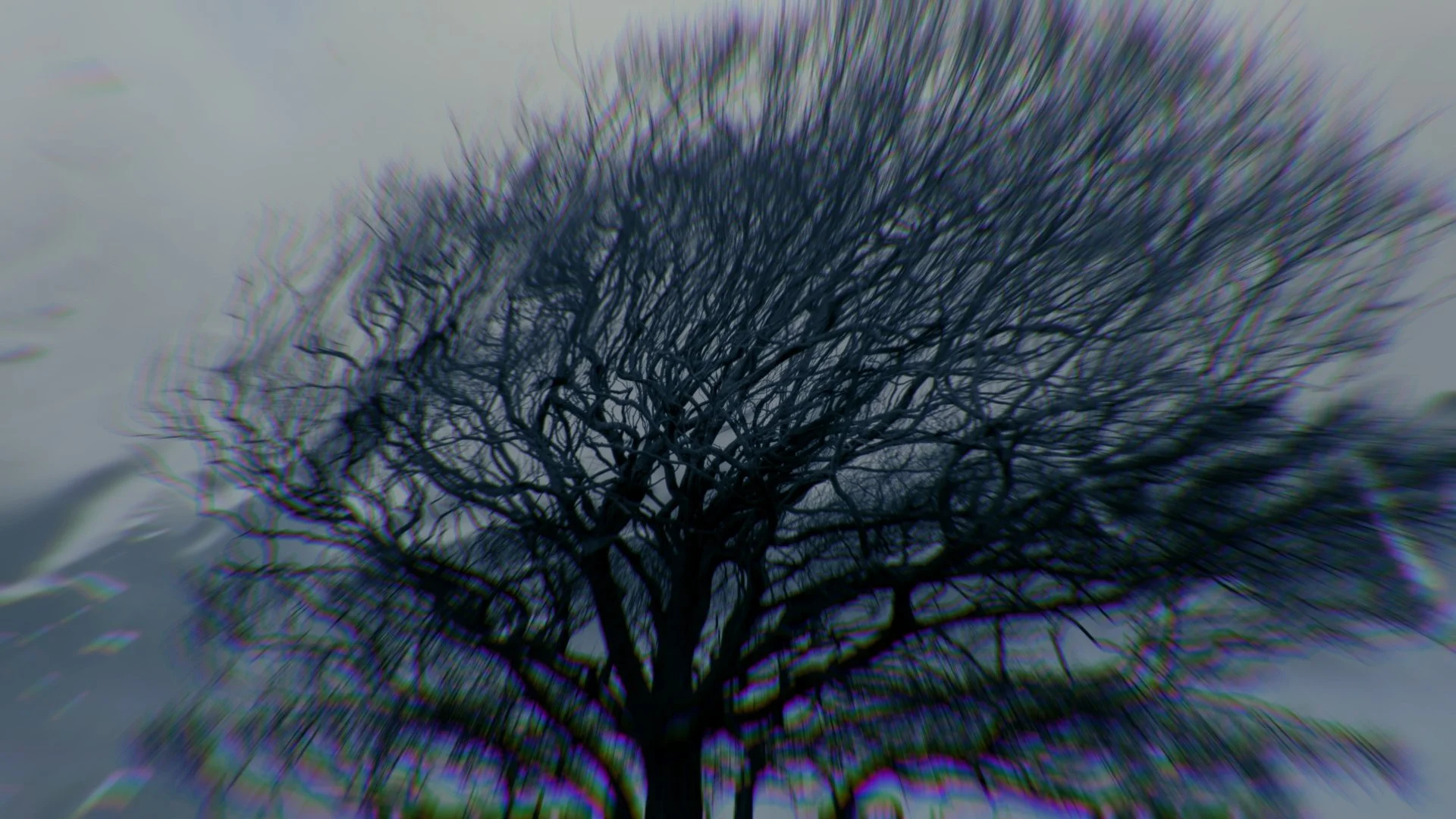
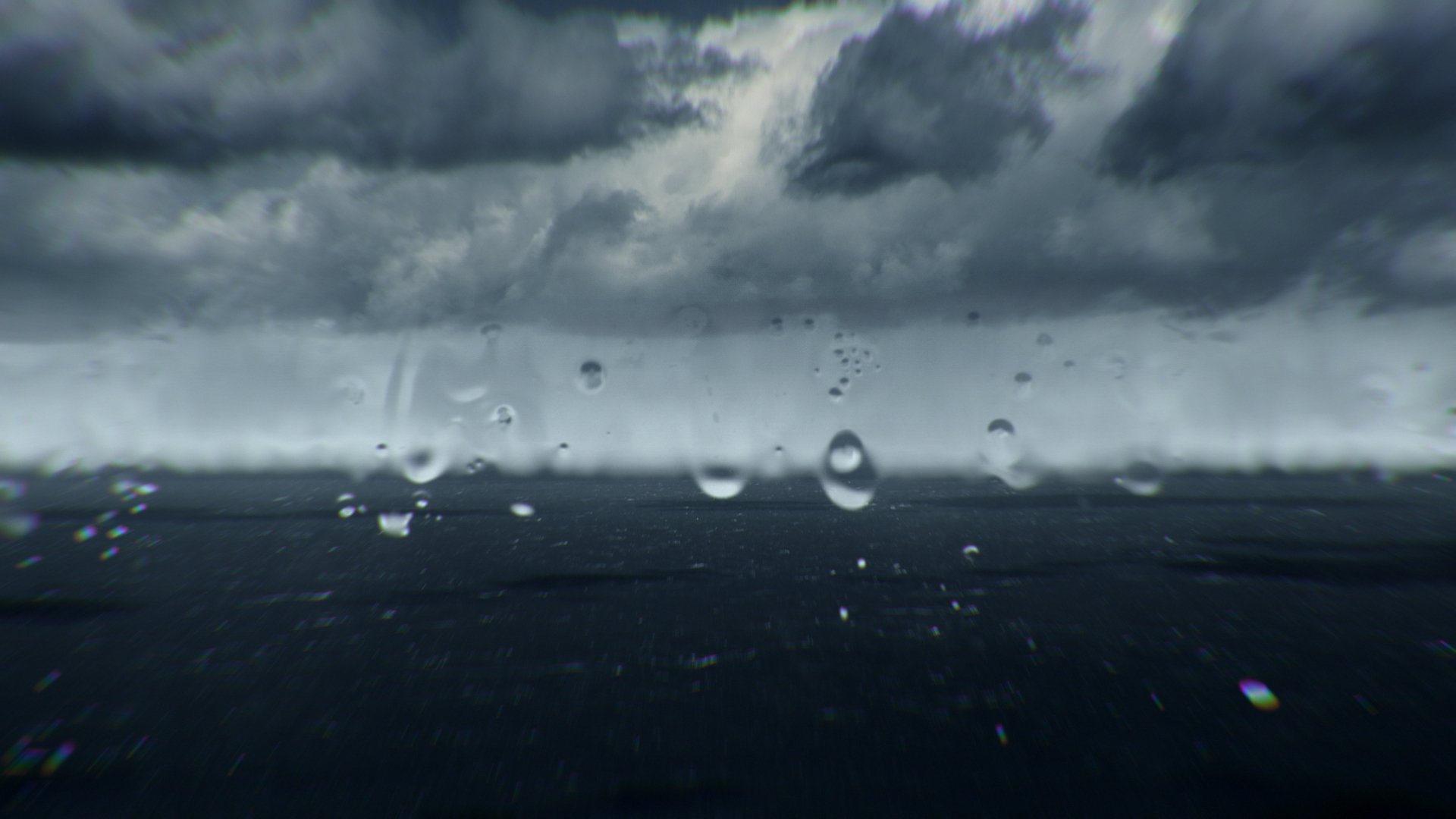
Salt Point - Linia Brzegu
Po doświadczeniu zanurzenia i przejścia przez ciemność pojawia się etap zatrzymania. Salt Point jest pracą o byciu „pomiędzy” — pomiędzy lądem a wodą, ruchem a trwaniem, powrotem a dalszym przejściem. W tej pracy nie chodzi już o przechodzenie przez kryzys, lecz o uważne bycie na jego krawędzi. Obraz nie prowadzi dalej ani nie domyka procesu; pozwala pozostać w stanie napięcia, w którym świat przestaje być doświadczany jako narracja, a zaczyna funkcjonować jako pole rezonansu. Salt Point jest momentem kalibracji — miejscem, w którym po przejściu przez negatywne wibracje możliwe staje się ponowne dostrojenie percepcji, zanim pojawi się jakakolwiek forma nowego początku. To etap zawieszenia, w którym ruch zostaje spowolniony, a uwaga skierowana na relację z przestrzenią, rytmem i trwaniem.
After the experience of immersion and passage through darkness, a moment of pause emerges. Salt Point is a work about being “in between” — between land and water, movement and duration, return and further transition. At this stage, the work is no longer concerned with moving through crisis, but with attentive presence at its edge. The image does not propel the viewer forward nor does it close the process; instead, it allows one to remain in a state of tension in which the world ceases to be experienced as narrative and begins to function as a field of resonance. Salt Point operates as a moment of calibration — a place where, after passing through negative vibrations, perception can be retuned before any form of new beginning appears. It is a suspended stage in which movement slows down and attention is redirected toward the relationship between space, rhythm, and duration.
VII — POCZĄTEK - Beginning
It All Begins Here
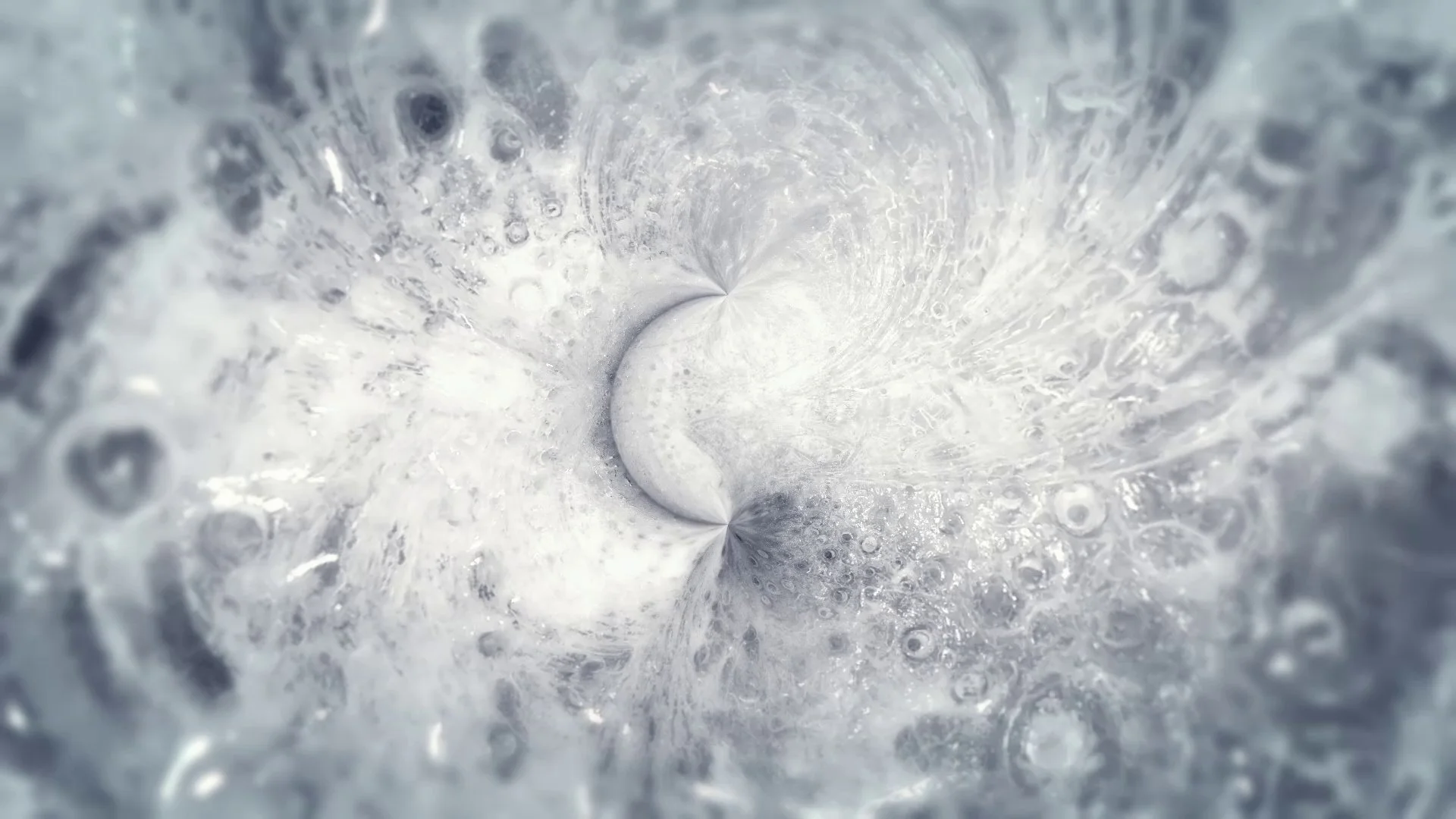
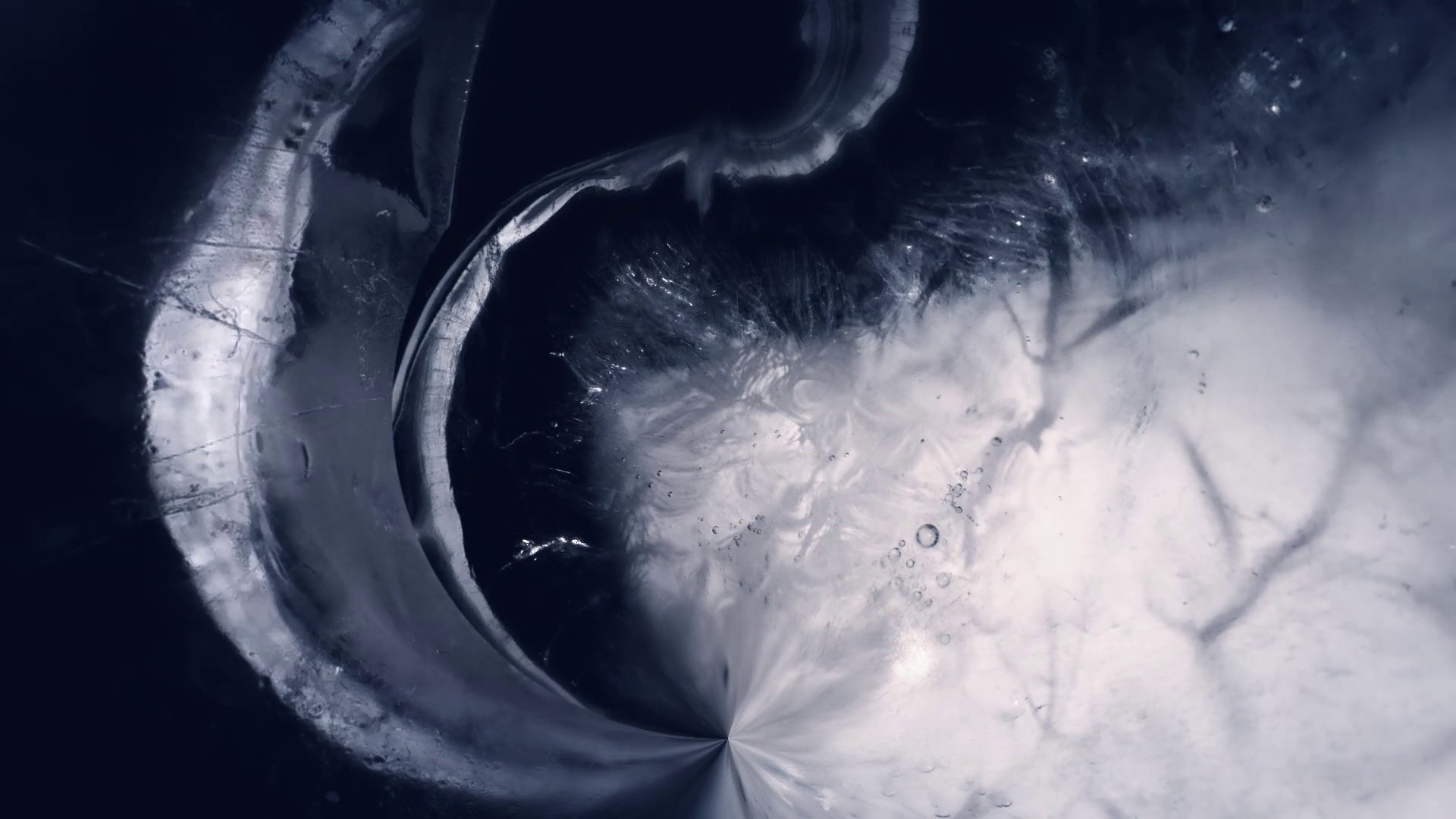
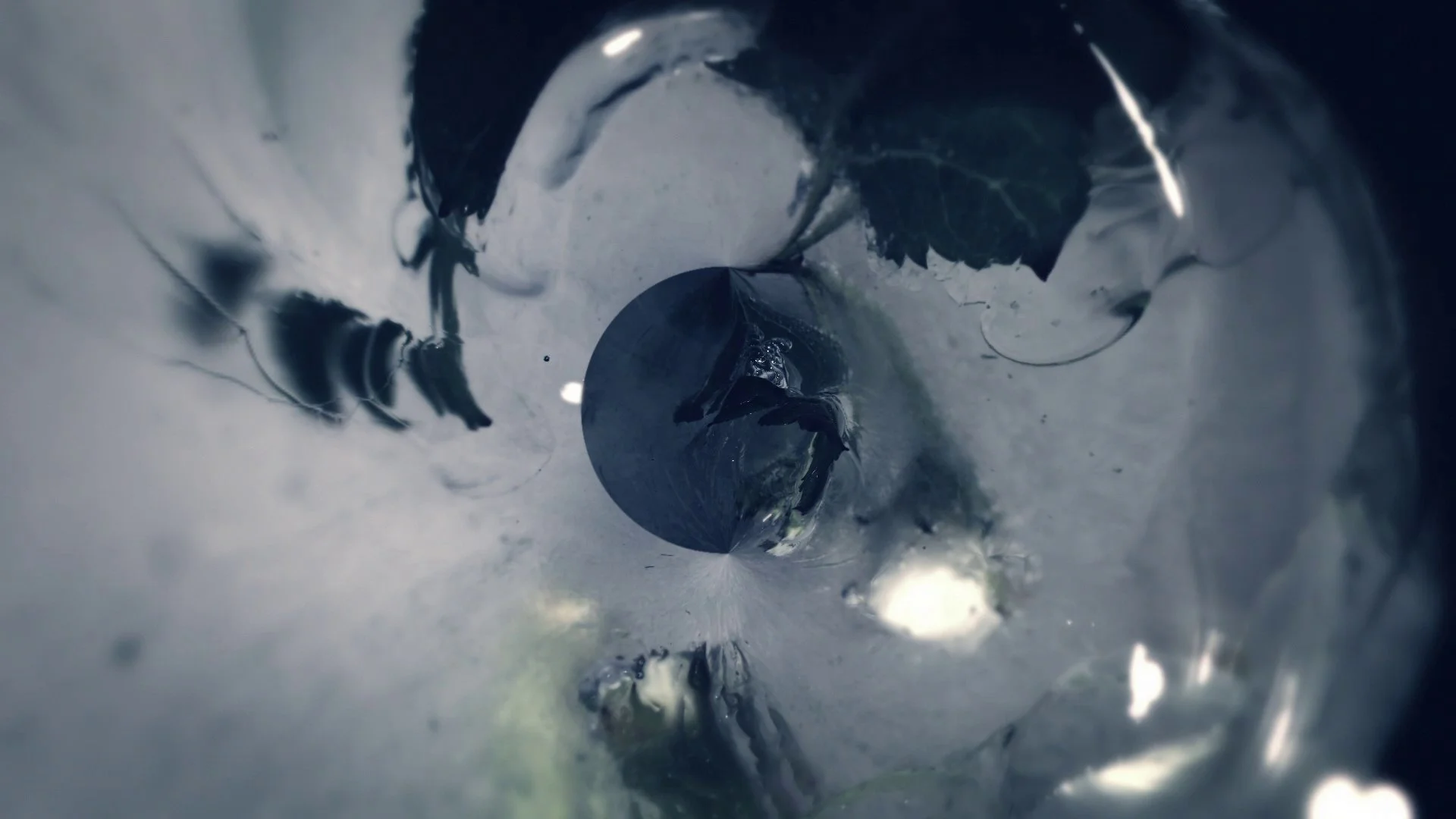
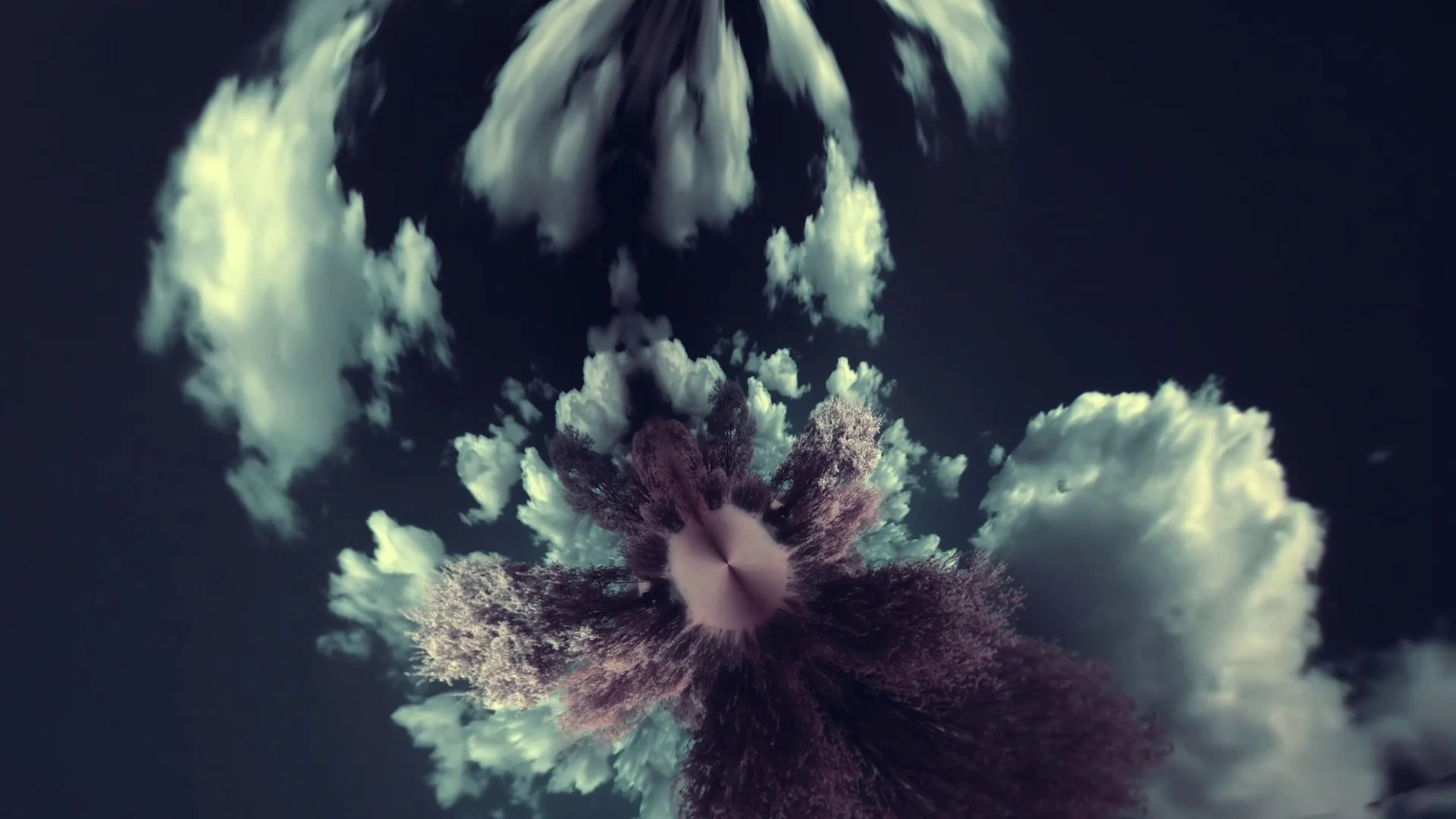
Początek (Seedling, 2021)
Ostatni etap tej drogi nie jest rozwiązaniem, lecz możliwością. Początek jest pracą o momencie, w którym po doświadczeniu rozpadu, żałoby i zanurzenia pojawia się potencjał nowego życia — jeszcze niepewny i kruchy. Film ma wyraźną strukturę drogi: rozpoczyna się obrazem przebijania się przez lód, a kończy wizją monumentalnych drzew ukazanych w ultrafioletowego timelapsu. Pomiędzy tymi punktami rozgrywa się proces powolnego wyłaniania się i wzrostu. Obraz prowadzi widza przez stan przejścia — od oporu i zamrożenia ku stopniowemu otwarciu. Zmiana nie następuje gwałtownie ani spektakularnie. Początek nie przedstawia narodzin jako wydarzenia, lecz jako proces wymagający czasu, cierpliwości i uważności. Nowy początek nie zostaje tu nazwany ani jednoznacznie zdefiniowany — ujawnia się poprzez zmianę rytmu obrazu, jego temperatury i materialności. Przejście od lodu do organicznej, niemal nienaturalnej intensywności ultrafioletowych drzew podkreśla, że odrodzenie nie jest powrotem do znanego porządku, lecz wejściem w inną formę istnienia. Po doświadczeniu negatywnych wibracji świata możliwe staje się odnalezienie własnej częstotliwości — kruchej, niestabilnej, ale autonomicznej. W mojej praktyce Początek domyka wcześniejsze etapy bez ich unieważniania. Jest momentem, w którym ruch znów staje się możliwy, a obraz staje się nośnikiem delikatnej, lecz realnej zmiany. To nie koniec procesu, lecz jego otwarcie.
The final stage of this trajectory is not a resolution, but a possibility. Beginning is a work about the moment in which, after experiences of rupture, mourning, and immersion, the potential for new life begins to emerge — still fragile and uncertain. The film follows a clear structure of passage: it opens with the image of breaking through ice and concludes with a vision of monumental trees revealed through ultraviolet time-lapse. Between these points unfolds a process of slow emergence and growth. The image guides the viewer through a transitional state — from resistance and freezing toward gradual opening. Change does not occur abruptly or spectacularly. Beginning does not present birth as an event, but as a process that requires time, patience, and attentiveness. The new beginning is neither named nor clearly defined; it reveals itself through shifts in the rhythm of the image, its temperature, and its materiality. The transition from ice to the organic, almost unnatural intensity of ultraviolet trees underscores that regeneration is not a return to a familiar order, but an entry into a different mode of existence. After experiencing the negative vibrations of the world, it becomes possible to find one’s own frequency — fragile, unstable, yet autonomous. Within my practice, Beginning closes the preceding stages without negating them. It marks a moment in which movement becomes possible again, and the image carries a delicate but tangible change. This is not the end of the process, but its opening.
Technical rider of the project
1. Conceptual and Theoretical Framework
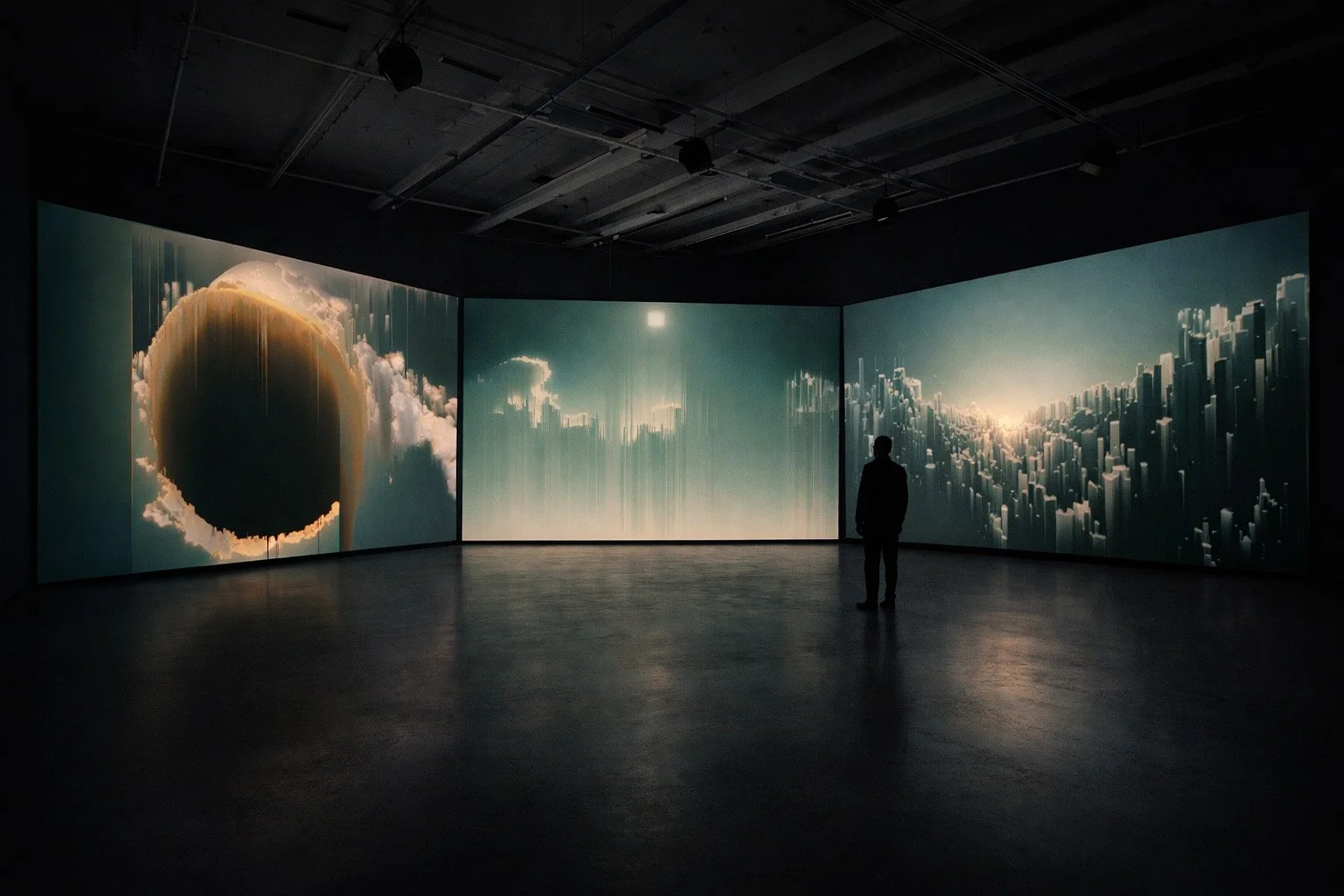
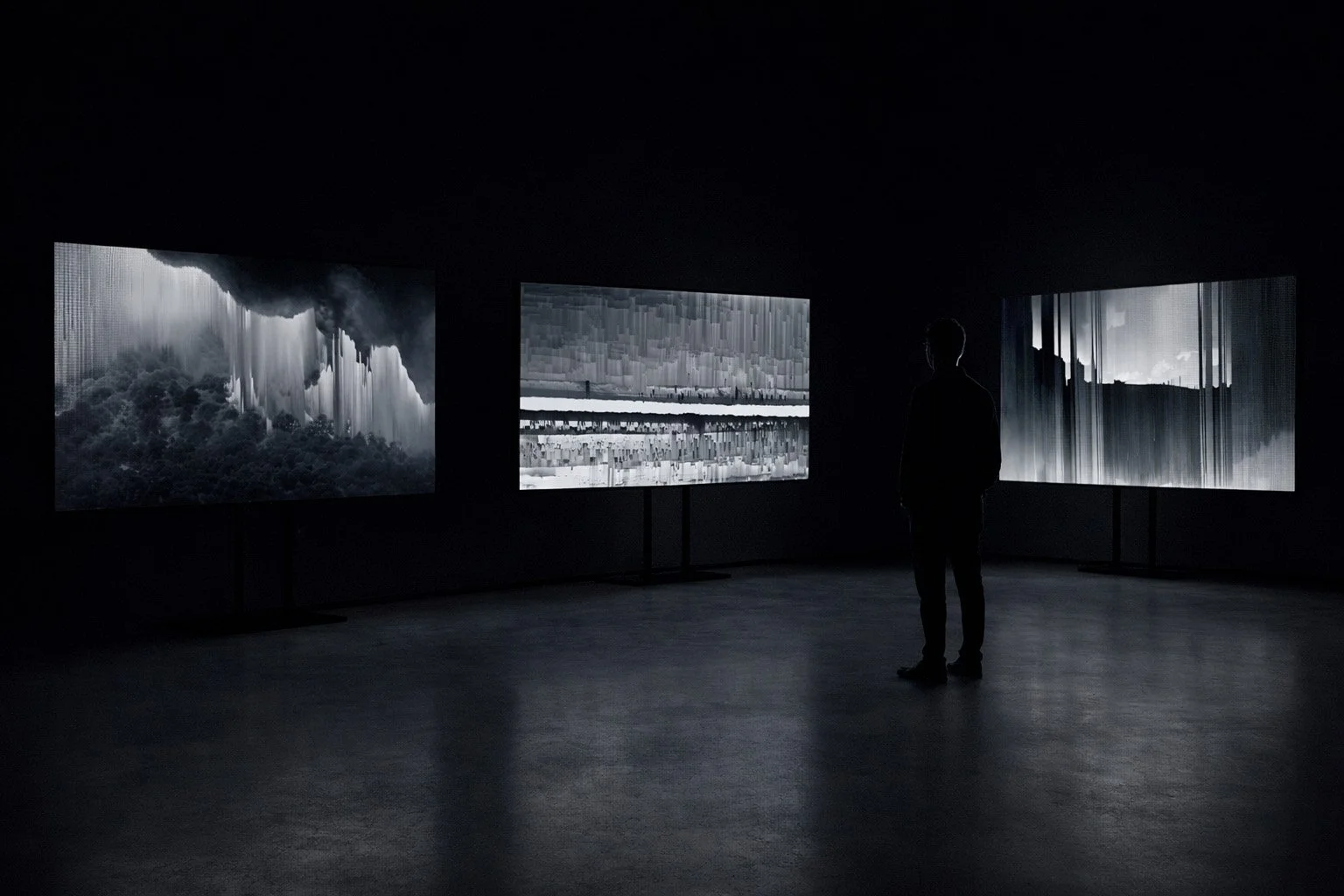
The World Is a Vibration is a multi-screen audiovisual installation investigating image as an energetic and temporal phenomenon rather than a narrative construct.
The work departs from the collapse of explanatory language. Instead of storytelling, it operates through oscillation, duration, and resonance between parallel image fields. The installation creates a spatial condition in which meaning emerges through rhythm, repetition, and perceptual tension across multiple screens.
The project examines:
the exhaustion of narrative structures,
the image as vibration rather than representation,
time as a material,
landscape as a residual field after ideological or symbolic collapse.
The work positions itself within the expanded cinema tradition, where cinematic language extends into architecture and spatial experience. Technology functions structurally — shaping temporal behavior, synchronization, and spatial relationships — not as spectacle.
The viewer is immersed in a suspended perceptual environment where resonance between screens becomes the primary generator of meaning.
2. Credits
Artist / Director: Jola Kudela
Concept Development: Jola Kudela
Sound Design / Composition: Julia Kent
Production: One Eyed Pixel Ltd
3. Format
Multi-screen audiovisual installation
Expanded cinema / digital installation
Number of screens: 3 (minimum) – scalable to 5 or 7 depending on space
Resolution: 1920x1080 (Full HD)
Frame rate: 25fps
Audio: stereo or multichannel (adaptable to venue)
Loop duration: 12–20 minutes (seamless loop)
4. Spatial / Architectural Requirements
Minimum space requirement:
Black box or darkened exhibition space
Minimum wall width: 6 meters
Ceiling height: minimum 2.8 meters
Controlled lighting (no daylight interference)
Screen configuration options:
Option A – Linear horizontal alignment
Three screens side-by-side, spaced 30–60 cm apart.
Option B – Spatial resonance configuration
Screens positioned in shallow arc or opposing walls to create perceptual tension.
Viewing distance:
Minimum 3 meters from central axis.
Walls must allow projection or screen mounting.
5. Projection / Display Requirements
Option 1 – Projection:
3 x Full HD projectors (minimum 5,000 lumens)
HDMI input
Ceiling or truss mounting capability
Option 2 – LED / LCD Screens:
3 x 55”–75” Full HD displays
HDMI input
Stable mounting or floor stands
6. Audio Requirements
Stereo minimum (2 speakers).
Preferred: quadrophonic or spatial audio (4 speakers) to enhance spatial resonance.
Audio output:
3.5mm / XLR / HDMI audio split depending on playback system.
Sound pressure level: moderate, immersive but not overpowering.
7. Playback System
Single workstation with multi-output GPU
TouchDesigner runtime environment
File format:
H.264 / ProRes / MP4 depending on playback system.
8. Software Used
Image processing and composition:
LRTimelapse
Autodesk Flame
TouchDesigner (real-time synchronization and spatial modulation)
No internet connection required for playback.
9. Electrical Requirements
220V–240V power supply
Minimum 6 grounded sockets
Dedicated circuit preferred
Estimated power consumption:
3 projectors (approx. 900–1500W total) OR
3 LED screens (approx. 600–900W total)
Playback system (approx. 200W)
Total estimated load: 1.5–2.5 kW depending on configuration.
10. Installation Time
Setup: 1 full working day
Calibration and synchronization: 4–6 hours
Technical supervision by artist preferred during installation.
11. Transportation
Digital delivery via secure link or hard drive.
12. Additional Notes
The installation can be adapted to different spatial conditions.
The number of screens may expand or reduce depending on architectural constraints.
The work is loop-based and designed for continuous exhibition format.
Kontekst praktyki / O mnie Practice Context / About Me
It All Begins Here
Moja praktyka artystyczna wyrosła z wieloletniego doświadczenia pracy w komercyjnym obiegu obrazu ruchomego. Przez ponad dwadzieścia lat byłam związana z dużymi produkcjami filmowymi, animacyjnymi i VFX, uczestnicząc w projektach wysokobudżetowych, w których obraz podporządkowany jest efektywności, precyzji i zewnętrznej narracji. Z czasem to środowisko zaczęło generować poczucie zmęczenia — zarówno materiałem, jak i samym sposobem produkowania sensu, w którym obraz coraz częściej redukowany był do funkcji, spektaklu i technicznej sprawności.
To zmęczenie stało się punktem zwrotnym. Stopniowo odchodziłam od pracy komercyjnej na rzecz autonomicznej praktyki artystycznej, poszukując form, które pozwalają na spowolnienie, niejednoznaczność i osobistą odpowiedzialność za obraz. Video art stał się dla mnie przestrzenią odzyskiwania czasu, pracy z niepewnością oraz nieliniowego myślenia — miejscem, w którym obraz funkcjonuje jako proces, a nie produkt.
Równolegle od ponad piętnastu lat rozwijam praktykę urban art i działań w przestrzeni publicznej (www.YOLART.net)
Praca poza instytucją — na ścianach miast, w kontekście architektury i przypadkowej publiczności — ukształtowała moje myślenie o obrazie jako o czymś, co jest doświadczane, a nie konsumowane. Obraz w przestrzeni publicznej podlega czasowi, pogodzie, politycznemu kontekstowi i niekontrolowanym reakcjom odbiorców. To doświadczenie bezpośrednio wpłynęło na moją praktykę wideo, z których wiele realizacji powstaje z myślą o ekspozycji poza klasycznym „white cube” — w przestrzeniach zewnętrznych, na elewacjach, w formie instalacji i projekcji.
Istotnym elementem tej praktyki stała się również rozszerzona rzeczywistość (AR). Traktuję ją nie jako efekt technologiczny, lecz jako narzędzie tworzenia „żywych obrazów” — prac funkcjonujących pomiędzy tym, co materialne i niematerialne, trwałe i tymczasowe. Hybrydowe realizacje łączące obraz, fotografię, malarstwo i AR rozwijają logikę moich interwencji w przestrzeni publicznej, tworząc warstwowe, czasowe środowiska, w których obraz pojawia się, znika i rekonfiguruje w relacji do miejsca oraz obecności widza.
We wszystkich tych formach — wideo, instalacji, działaniach site-specific i AR — moja praktyka koncentruje się na poszukiwaniu obrazów zdolnych rejestrować niestabilność, presję polityczną i emocjonalne rezonanse bez zamykania ich w jednoznacznych narracjach. Odejście od produkcji komercyjnej nie było odrzuceniem kompetencji technicznych, lecz ich przestawieniem: ku pracy z obrazem jako polem badania, wrażliwości i doświadczenia.
My artistic practice grew out of many years of working within the commercial circulation of moving images. For over twenty years I was involved in large-scale film, animation, and VFX productions, contributing to high-budget projects in which the image is subordinated to efficiency, precision, and externally imposed narratives. Over time, this environment began to generate a sense of fatigue — both with the material itself and with a mode of meaning production in which the image was increasingly reduced to function, spectacle, and technical performance.
This fatigue became a turning point. I gradually moved away from commercial work toward an autonomous artistic practice, seeking forms that allow for slowness, ambiguity, and personal responsibility within the image. Video art became a space for reclaiming time, working with uncertainty, and developing non-linear thinking — a place where the image operates as a process rather than a product.
In parallel, for over fifteen years I have developed an urban art practice and worked extensively in public space (www.YOLART.net). Working outside institutional frameworks — on city walls, in relation to architecture, and for accidental audiences — shaped my understanding of the image as something to be experienced rather than consumed. Images in public space are subject to time, weather, political context, and uncontrollable viewer responses. This experience has directly influenced my video practice, many works of which are conceived for presentation beyond the traditional “white cube” — in outdoor spaces, on façades, and as installations or projections.
Augmented Reality (AR) has also become an important element of this practice. I approach AR not as a technological effect, but as a tool for creating “living images” — works that operate between the material and the immaterial, the permanent and the temporary. Hybrid realizations combining moving image, photography, painting, and AR extend the logic of my public-space interventions, producing layered, time-based environments in which the image appears, disappears, and reconfigures itself in relation to place and the viewer’s presence.
Across all these forms — video, installation, site-specific work, and AR — my practice focuses on seeking images capable of registering instability, political pressure, and emotional resonance without closing them into fixed narratives. Moving away from commercial production was not a rejection of technical competence, but a reorientation of it: toward working with the image as a field of inquiry, sensitivity, and lived experience.
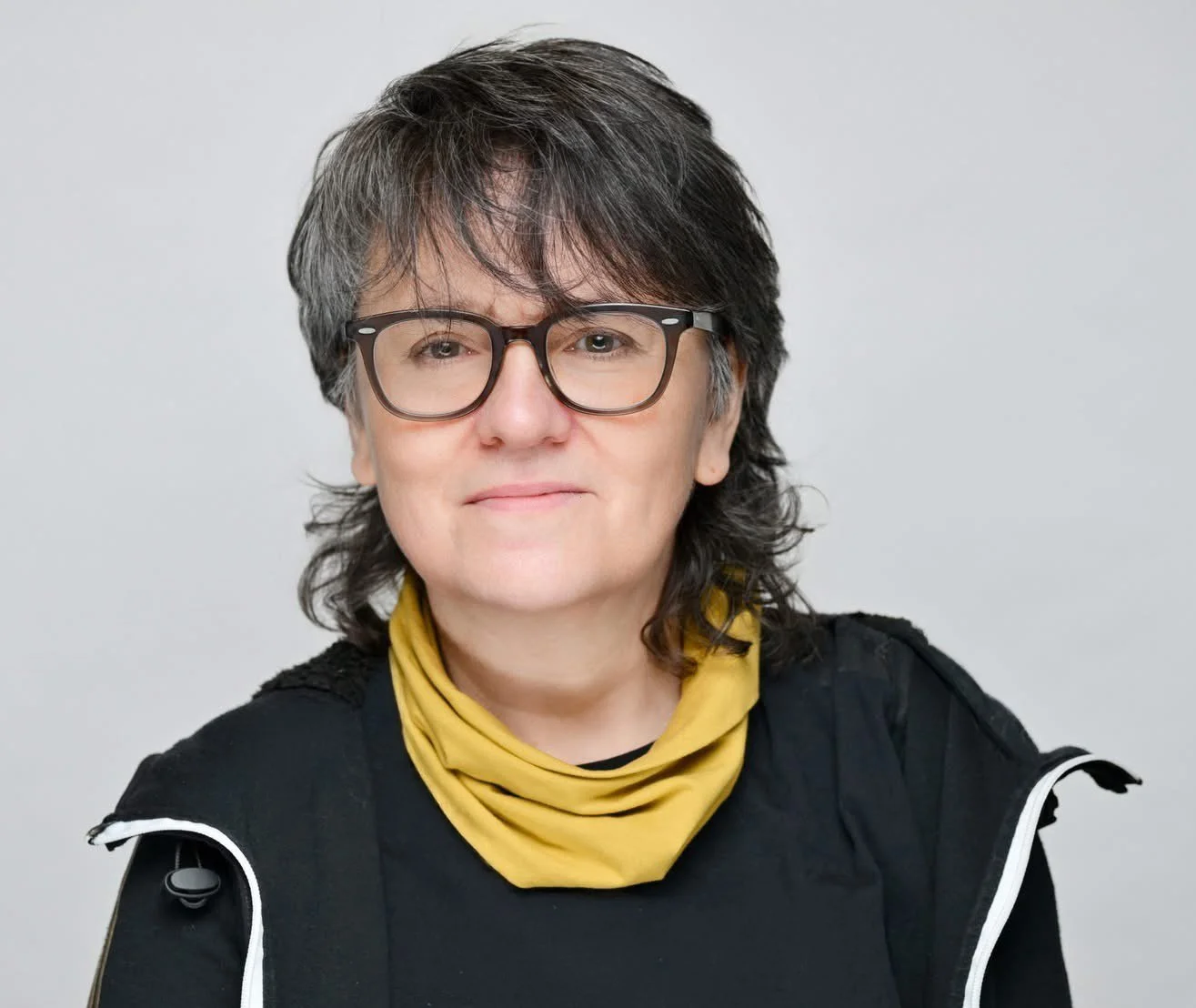
JOLA KUDELA aka YOLA
Visual Artist / Video Art / Moving Image / Urban Art
EDUCATION
1995 — École des Métiers de l’Image – CFT Gobelins, Paris
Computer Animation
1990–1994 — Polish National Film School (PWSFTviT), Łódź
Animation Film Directing and Special Effects
1985–1990 — State Secondary School of Fine Arts, Wrocław
ART EXHIBITIONS & INSTALLATIONS
2025
22nd Warsaw Art Fair, Urban Art Section — Leonarda Gallery, Warsaw
2022
They Went to Sea — AR mural & video installation (200 m²), Doncaster, UK
Fala — group exhibition, Galeria Miejska, Częstochowa, Poland
2020
Museum of Modern Art, Rio de Janeiro — group exhibition
Investigations and Elaborations in the Ways of Seeing
2019
Full Moon Party — solo live happening, Warsaw (curated by Pracownia22)
Reclaiming Babel — 180 m² installation, Liverpool (RISE Festival)
Festiwall — installation, Paris
North Devon Art Residency, UK (curated by Canal Gallery, London)
2018
Fine Arts Film Festival — Venice Institute of Contemporary Art
The Wall51 — group exhibition, Paris
2017
Institute of Contemporary Arts (ICA), London — New Shorts: Experiments
The Blind Leading the Blind — installation, Contexts Festival, Sokołowsko
We Are All in the Same Boat — street art installation (200 m²), Harlow, UK
2016–2015
#Quai36 — installation, Paris
ART NOW — group exhibition, London
TIAF Independent Art Fair — London
ART4PIECE — charity auction, Sotheby’s, London
2011–2005
Nuit Blanche — Paris
Projection216 — solo exhibition, Shanghai
Galeria Opus — solo exhibition, Łódź
Centre Culturel André Malraux — solo exhibition, Le Pecq
Galerie Autre Regard — solo exhibition, Paris
FNAC Digital — solo exhibition, Paris
Palais de Tokyo (Hypegallery) — group exhibition, Paris
SELECTED AWARDS
They Went to Sea
Best Experimental Short Film — Florence Film Awards, 2022
Honourable Mention — Paris Film Awards, 2022
Empty States
Best Experimental Film — Super Shorts Film Festival, New York, 2021
Best Experimental Film — Obskuur Ghent Film Festival, 2021
Seedling
Golden Reel Award — Singapore, 2021
I Choose Not To
Best Experimental Film — Around International Film Festival, Amsterdam, 2017
Award of Merit — Best Shorts Competition, California, 2017
We Are All in the Same Boat
Jury Special Award — FilmArte Festival, Berlin, 2019
Trains
Grand Prix — Yach Film Festival, Opole
Best Music Video — Los Angeles Short Film Festival
Best Cinematography — NYC Indie Film Festival
OTHER DISTINCTIONS
PX3 Prix de la Photographie Paris — Third Prize, 2005
Best Book of the Year (Illustration) — 2004
Artistic Scholarship of the Minister of Culture — 1995
Artistic Scholarship of the Mayor of Wrocław — 2025
PROFESSIONAL EXPERIENCE
Alongside my independent artistic practice, I have extensive professional experience in animation, visual effects, and moving image production. My work has included roles as director, art director, and visual supervisor on feature films, animated productions, and international cultural projects in the United Kingdom, France, and Poland.
I have collaborated with studios and institutions including:
The Mill, MPC, Double Negative, Mikros Image, Mac Guff, Pathé, Studio 100 Animation, ARTE.
This professional background informs the technical precision and material awareness of my video art practice, without defining its conceptual framework.